Roots and Remedies: The Medicinal Gardens That Sustained America's Rural Homesteads
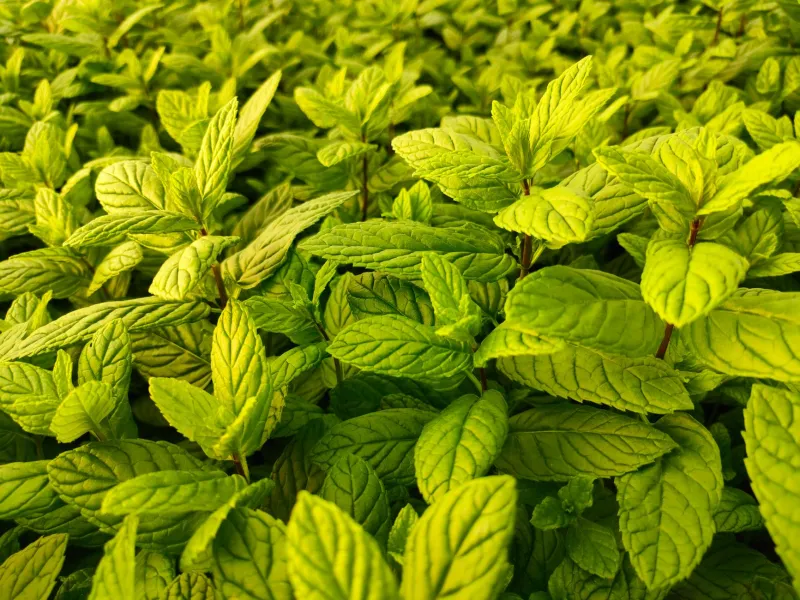
Before the railroad carried patent medicines to every county seat, and well before the rural physician had a reliable road to travel, the American farm family maintained its own dispensary. It grew quietly beside the kitchen door, or in a fenced plot near the well — a garden of herbs, roots, and flowering plants that served simultaneously as larder and medicine chest. These spaces, variously called physic gardens, herb yards, or simply the herb patch, were among the most deliberately managed and carefully tended features of the historic homestead. Yet they are among the least documented and most thoroughly forgotten.
Understanding what these gardens contained, how they functioned, and what their disappearance cost rural communities requires looking beyond the romanticized image of drying lavender bundles and into the serious, often urgent botanical work that farm women — and occasionally men — performed as a matter of survival.
A Living Inheritance
The medicinal garden of the American farmstead was never invented whole. It arrived, in pieces, through multiple streams of inherited knowledge. European settlers carried seeds and cuttings across the Atlantic alongside their household goods, transplanting chamomile, valerian, rue, and horehound into colonial soil. Indigenous communities contributed an entirely parallel — and frequently superior — pharmacopoeia, introducing settlers to echinacea, black cohosh, goldenseal, and slippery elm bark, plants that eventually found their way into the family herb yard through trade, observation, and the practical necessity of using what the land offered.
By the late eighteenth and early nineteenth centuries, the medicinal garden had become a recognized feature of the well-managed American farm. Gardening manuals of the period, including Bernard McMahon's influential The American Gardener's Calendar of 1806, devoted substantial attention to medicinal and aromatic herbs, listing dozens of species alongside instructions for their cultivation, harvest, and preparation. Seed catalogs from firms such as Shaker communities in New York and Ohio — themselves prolific commercial producers of medicinal herbs — offered farm families a reliable supply of botanically sound plant material.
What is striking, when examining surviving household records from this era, is how precisely these gardens were managed. Planting notes, harvest dates, and preparation instructions appear alongside recipe entries in family journals, indicating that the cultivation of medicinal plants was treated with the same methodical seriousness as any other farm enterprise.
What the Records Reveal
Surviving farm journals and household receipt books — the period term for what we now call recipe books — offer the most direct window into the medicinal garden's daily function. Collections held by historical societies across New England, the mid-Atlantic states, and the upper Midwest contain household manuscripts in which instructions for preparing a poultice from plantain leaves appear on the same page as directions for putting up apple butter. The continuity is instructive: in the pre-modern farm household, food and medicine occupied the same conceptual and physical space.
Pennsylvania German farmsteads, in particular, maintained a notably systematic approach to medicinal horticulture. The Hausmittel — or household remedy — tradition brought from the German-speaking regions of Europe carried with it a detailed herbalism that merged practical botany with folk belief. Surviving Hausbücher, or household books, from Lancaster and Berks County farms document preparations involving yarrow, wormwood, St. John's wort, and elderberry, with careful notes on dosage and seasonal timing.
Oral histories collected by Works Progress Administration researchers during the 1930s add texture to the written record. Interviews conducted with elderly rural women in Appalachia, the Ozarks, and the rural South describe in vivid detail the layout and management of herb gardens: where the pennyroyal grew (near the fence, for air circulation), which plants required shade (feverfew and boneset), and how knowledge of preparation — which roots to dry, which to use fresh, which to simmer in lard for a salve — was passed from mother to daughter with the same gravity accorded to the transmission of land itself.
The Architecture of Care
The physical design of the medicinal garden, where it can be recovered from landscape archaeology, garden plans, or period illustrations, reveals a practical intelligence that modern heritage interpreters are only beginning to appreciate fully. These were not haphazard collections of plants. They were organized according to use, growth habit, and in many cases the principles of companion planting that farm families understood empirically long before the terminology existed.
New England stone-walled herb gardens, several of which survive in fragmentary form at historic house museums in Massachusetts and Connecticut, typically positioned the most frequently harvested plants nearest the kitchen entrance — mint, sage, and thyme within arm's reach, while larger medicinal shrubs such as elder and bayberry were planted along the perimeter. Southern plantations maintained more elaborate physic gardens, though the labor that sustained them was, overwhelmingly, enslaved, a fact that heritage interpretation is increasingly obligated to acknowledge.
The Shaker settlements of New York, Ohio, Kentucky, and elsewhere left perhaps the most thoroughly documented medicinal garden tradition in American agricultural history. Their commitment to botanical medicine as a religious and commercial practice produced detailed garden records, seed catalogs, and processing manuals that remain invaluable resources for researchers and heritage interpreters alike. The restored Shaker Village at Pleasant Hill, Kentucky, and the Hancock Shaker Village in Massachusetts both maintain interpreted medicinal gardens that draw directly from these surviving records.
Restoration and Interpretation
Across the country, a modest but serious movement is underway to restore medicinal herb gardens to historic farm properties, not as decorative gestures but as functioning interpretive landscapes. At a handful of heritage farms and living history sites, horticulturalists and historians are working together to reconstruct planting plans from period sources, locate heirloom seed stock, and train interpretive staff in the actual preparation of traditional remedies.
The challenges are considerable. Many of the plant varieties once common in American farm gardens are no longer commercially available and must be sourced from specialty seed preservationists or heritage seed libraries. Some plants — pennyroyal and black cohosh among them — present safety concerns that require careful interpretive framing. And the knowledge required to explain these gardens credibly extends well beyond horticulture into medical history, ethnobotany, and the social history of rural women's labor.
Yet the effort carries genuine historical weight. The medicinal garden was not a quaint supplement to farm life. For families living beyond the reach of professional medicine — which, in rural America, described the majority of the population well into the twentieth century — it was a primary healthcare system. To restore it to visibility is to restore a dimension of agricultural history that has been too long overlooked.
For visitors to heritage farm sites, a well-interpreted medicinal garden offers something rare: a direct, sensory encounter with the knowledge and labor of the people who lived there. The smell of crushed lemon balm, the sight of a drying rack hung with yarrow and horehound, the texture of a hand-copied remedy in a farm wife's journal — these are not incidental details. They are the substance of a history that deserves to be remembered.