Ink and Harvest: What Surviving Farm Journals and Ledgers Reveal About the Inner Lives of America's Rural Families
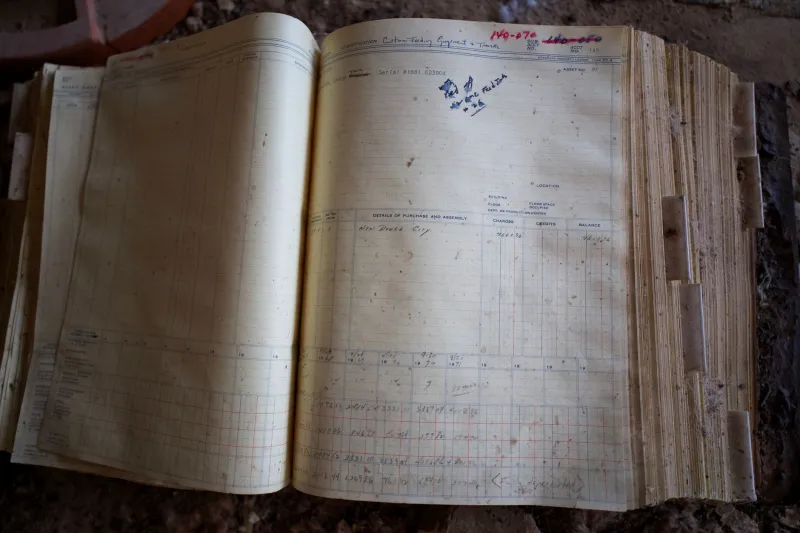
Somewhere in a county historical society in central Ohio, a leather-bound journal sits behind archival glass. Its pages are water-stained at the corners, the ink faded to a warm sepia. The handwriting shifts across the years — steady and confident in the early entries, cramped and hurried during the difficult seasons, almost trembling in the year the author notes the death of a draft horse named Solomon. No census record captures any of this. No deed or plat map comes close. But the journal does.
Across the United States, thousands of farm journals, account books, crop diaries, and household ledgers have survived the passage of generations. Some rest in university special collections. Others remain in farmhouse drawers, passed along with the property itself, their significance only dimly understood by the families who inherited them. Taken together, these documents constitute one of the most underutilized bodies of primary evidence in American agricultural history — a vast, handwritten archive of daily experience that historians, preservationists, and heritage travelers are only beginning to fully appreciate.
More Than a Record of Bushels and Cents
The instinct to keep written farm records in America is nearly as old as the republic itself. George Washington maintained meticulous agricultural diaries at Mount Vernon. Thomas Jefferson tracked planting schedules and soil experiments at Monticello with the precision of a scientist. But the tradition extended far beyond the famous and the wealthy. Ordinary farm families — immigrant homesteaders in the upper Midwest, freed Black farmers in the post-Reconstruction South, Mennonite communities in Pennsylvania, cattle ranchers in the Texas Hill Country — kept their own records, shaped by the same fundamental need to make sense of a life governed by weather, soil, and market forces beyond their control.
At their most utilitarian, these documents are exactly what they appear to be: ledgers of grain prices, lists of seed purchases, tallies of livestock sold at county fairs. But a careful reader quickly discovers that the practical and the personal are rarely separable. A Wisconsin dairy farmer recording milk yields in January 1888 pauses mid-entry to note that the temperature dropped to thirty-one below zero and that his youngest daughter has a fever. A Kansas wheat grower tracking the catastrophic harvest of 1893 — a year of drought compounded by economic depression — writes simply: We are trying to hold on. Three words. An entire world of suffering compressed into a single line.
The Weather as Witness
No subject appears more consistently across American farm journals than the weather. Farmers recorded it with the devotion of amateur meteorologists, often making daily notations for decades without interruption. These records are not merely anecdotal. Researchers at several universities have mined nineteenth-century farm journals to reconstruct regional climate patterns with a precision that official weather bureau data — which only became systematic in the 1870s — cannot match.
But the value of these weather entries extends beyond climatology. They reveal something about the psychological texture of farm life: the way a farmer's mood, prospects, and sense of the future were perpetually entangled with the sky overhead. A late frost in May was not an inconvenience. It was a potential catastrophe that could erase months of labor and push a family deeper into debt. Reading these entries, one begins to understand why rural American culture developed such a rich vocabulary around weather — why it was spoken of with something approaching reverence, caution, and occasionally bitter humor.
Financial Struggle Written in Plain Hand
If weather was the dominant natural force shaping farm life, debt was its human equivalent. Account books from the nineteenth and early twentieth centuries document with painful clarity the financial precariousness that defined agricultural existence for most American farming families. The figures themselves tell a story: a balance that inches forward in good years, retreats sharply after a bad harvest, and is periodically reset by a loan from a local bank or a merchant willing to extend credit through the winter.
What distinguishes these records from dry financial documents is the evidence of human decision-making embedded within them. One can trace, across multiple seasons, the moment a farmer chose to shift from one crop to another — perhaps moving from wheat to corn in response to falling commodity prices. One can observe the year a family stopped purchasing certain goods from the general store, an almost invisible austerity measure that nonetheless speaks volumes about the pressures they were managing. In some ledgers, creditors' names recur so frequently they become characters in an ongoing narrative, the local banker or feed merchant looming just offstage in every entry.
Unexpected Moments of Joy and Ceremony
It would be a misreading of these documents to treat them solely as records of hardship. Farm journals also capture, often in brief and unguarded passages, the texture of rural celebration and community. A Pennsylvania German farmer notes that the threshing crew arrived on a Tuesday and that his wife prepared a dinner of roast pork and apple butter that drew considerable compliments. An Iowa farm wife records the birth of a calf with evident delight, giving it a name before the ink is dry. A Missouri farmer, completing his final entry of the year on December 31, 1901, writes: A fair year. We are grateful.
These moments matter. They complicate and humanize a historical record that is too often reduced to statistics and broad economic trends. They remind us that the people who built American agriculture were not simply producers of commodities but participants in a full human life — one shaped by hardship, yes, but also by pride, affection, humor, and the quiet satisfactions of work well done.
Preserving What Remains
The survival of farm journals and ledgers has never been guaranteed. Paper is fragile. Attics flood. Estates are settled without anyone recognizing the historical value of what is stored in a cardboard box. Organizations such as the Library of Congress, state historical societies, and university agricultural archives have made significant efforts to collect and digitize these materials, but the work is far from complete. Many documents remain in private hands, their existence unknown to any institution.
For heritage travelers visiting historic farm properties, the presence of surviving journals or account books — whether displayed in an interpretive center or preserved in a county archive nearby — offers one of the most direct connections available to the human experience of agricultural history. Reading the handwriting of a farmer who worked a specific piece of land two centuries ago is a different order of encounter than viewing a restored barn or a collection of antique tools. It is, in a very real sense, hearing a voice.
The Archive Beneath Our Feet
American agricultural history has long been told through landscape and structure — through the evidence of fields, buildings, and the physical traces left by generations of labor. Farm journals and ledgers invite us to read a parallel archive, one written not in earth and timber but in ink and intention. They are, in their way, as durable as any stone foundation — and far more revealing about the inner life of the people who built this country from the soil outward.
For those who seek a deeper understanding of rural America's past, the search for these documents is its own form of heritage travel: a journey not across geography but across time, guided by the handwriting of the dead and the ordinary, extraordinary things they chose to record.