Fire, Iron, and Memory: Reclaiming the Lost Cooking Traditions of America's Historic Farm Kitchens
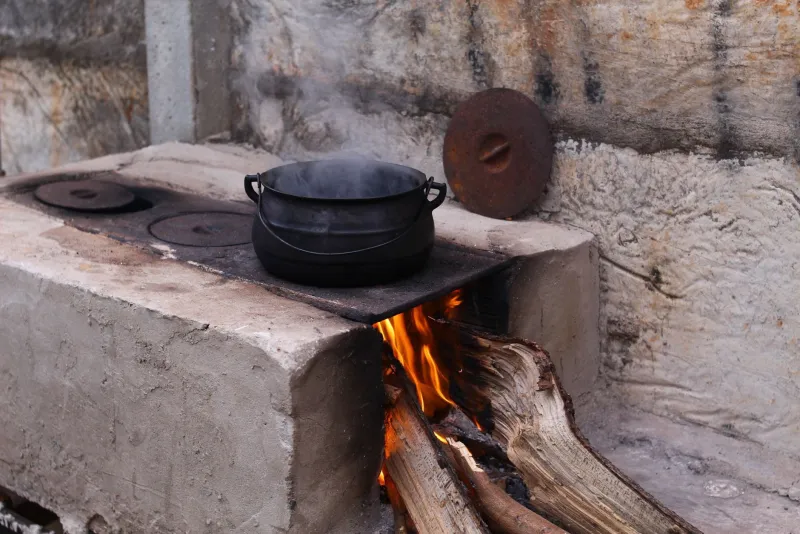
Walk through nearly any surviving eighteenth- or nineteenth-century farmhouse in the United States, and you will eventually arrive at the same threshold: the kitchen. It may be a cavernous, soot-blackened room anchored by a fireplace large enough to stand inside, or a modest lean-to addition where a cast-iron stove once radiated heat through long winter mornings. Whatever its form, the farm kitchen was never merely a place where meals were prepared. It was an architectural expression of geography, culture, and agricultural necessity — and the particular technologies it housed tell us more about how rural Americans actually lived than almost any other surviving artifact.
Today, a dedicated community of farm heritage site managers, food historians, and preservation specialists is working to document these spaces before time, neglect, and misguided renovation erase what remains.
A Room Shaped by the Land Itself
No two regions of the United States produced the same farm kitchen, and the differences were rarely accidental. In the glacially cleared landscapes of New England, early farmsteads were built around enormous central chimneys capable of serving multiple fireplaces simultaneously. The kitchen hearth in a Massachusetts or Connecticut saltbox home could span six feet or more in width, fitted with iron cranes, trammel hooks, and bake ovens built directly into the masonry. The architecture was a direct response to brutal winters, the ready availability of fieldstone, and the English domestic traditions settlers carried with them across the Atlantic.
Move south into the Mid-Atlantic and upper South, and the kitchen often detaches from the main house entirely. The freestanding summer kitchen — sometimes called the cookhouse — became a defining feature of farms across Maryland, Virginia, and the Carolinas. The separation was practical: it kept the heat of cooking fires away from living quarters during sweltering summers, and it reduced the risk of a kitchen fire consuming the entire farmstead. These structures, many of them built by enslaved laborers who also cooked within them, represent one of the most historically layered building types in American agricultural history.
Further west, in the German-settled corridors of Pennsylvania and the Ohio River valley, farm kitchens reflected Central European traditions adapted to American materials. The five-plate and ten-plate iron stoves produced by Pennsylvania foundries in the early nineteenth century were engineering achievements that allowed for more controlled, fuel-efficient cooking than open-hearth methods permitted. Food historians note that the persistence of certain preservation techniques — particularly the smoking and brining traditions documented in earlier scholarship — was directly tied to the specific equipment these immigrant communities brought with them or quickly developed once they arrived.
The Cast-Iron Pivot
Perhaps no single material transformation reshaped the American farm kitchen more profoundly than the widespread adoption of cast iron between roughly 1820 and 1880. The shift was gradual and uneven across regions, but its consequences were enormous. Cast-iron cookware — Dutch ovens, skillets, griddles, and the specialized vessels used for rendering lard or boiling soap — made it possible to manage heat with a precision that open-fire cooking rarely allowed.
The enclosed wood stove, which began displacing open hearths in prosperous northern farmhouses by the 1840s, represented the culmination of this cast-iron era. Heritage site managers at living history farms from Maine to Missouri describe the wood stove as something close to a revolution in domestic labor. A skilled farm wife or domestic worker could manage multiple cooking tasks simultaneously on a single stove top, regulate oven temperature through damper adjustment, and keep a reservoir of hot water available throughout the day — none of which was easily accomplished at an open hearth.
Yet the transition was not universally embraced, and the reasons for resistance are themselves historically instructive. In poorer and more isolated farming communities, the cost of a quality stove was prohibitive well into the late nineteenth century. In some Southern communities, the cultural and practical familiarity with open-fire cooking methods — many of them rooted in African culinary traditions — meant that the hearth remained in active use long after it had been abandoned elsewhere.
What Survives and What Has Been Lost
The physical record of these kitchen environments is fragmentary and unevenly distributed. Some of the best-preserved farm kitchen complexes in the United States exist within the holdings of state historical societies, land trust properties, and living history museums. Plimoth Patuxent in Massachusetts, the Farmers' Museum in Cooperstown, New York, and numerous county-level heritage sites across the Midwest maintain working kitchen demonstrations that allow visitors to observe historical cooking methods firsthand.
But for every documented farmstead kitchen that has been carefully preserved, dozens more have been gutted, collapsed, or quietly demolished during the modernization of working properties. Heritage advocates point out that the detached summer kitchen has suffered disproportionate losses, partly because these structures were often built of wood rather than stone or brick, and partly because they were viewed as expendable once central heating and modern appliances arrived.
Food historian and preservation consultant Margaret Ohlsen, who has spent two decades documenting vernacular farm kitchen architecture across the upper South, describes the challenge in direct terms. "The kitchen was always the most intensively used space on a farm," she has noted in her fieldwork documentation. "That intensity of use meant constant modification, constant repair, and ultimately, constant erasure. What we're left with in most cases are fragments — a crane hook embedded in a chimney, a worn hearthstone, a bake oven sealed behind drywall."
The Work of Documentation
In response to these losses, a growing number of organizations are combining architectural survey work with oral history collection and culinary archaeology to reconstruct what the written record cannot fully provide. Measured drawings of surviving hearth configurations, materials analysis of chimney mortar, and the careful cataloging of surviving kitchen implements are all contributing to a more complete picture of regional cooking technology.
At the same time, farm heritage sites that retain original kitchen spaces are increasingly designing interpretive programming around those rooms. Cooking demonstrations using period-appropriate equipment, hands-on workshops in hearth baking and cast-iron maintenance, and guided examinations of kitchen architecture have all proven effective at drawing visitors who might not otherwise engage with agricultural history.
The appeal is understandable. The kitchen is where the abstract history of farming — crop yields, soil chemistry, market prices — becomes something immediate and human. It is where the labor of the field was transformed into the sustenance of the family, and where the particular character of a region's land, climate, and cultural memory was expressed in what people ate and how they cooked it.
Preserving the Evidence Before It Disappears
For those working at the intersection of architectural preservation and food history, the urgency of this documentation work is difficult to overstate. Every decade that passes without systematic survey and recording means the permanent loss of physical evidence that cannot be reconstructed from written sources alone.
The farm kitchen, in all its regional variation, is one of the most direct surviving connections between the American agricultural past and the present. Its hearths, its ironwork, its carefully adapted architectures — these are not merely curiosities for history enthusiasts. They are primary documents, as legible and as irreplaceable as any manuscript, recording how generations of rural Americans shaped their lives around the land they worked and the fires they kept burning through every season.