Roots Without Trees: The Quiet Mission to Rescue Heirloom Fruit Varieties From America's Vanished Farmsteads
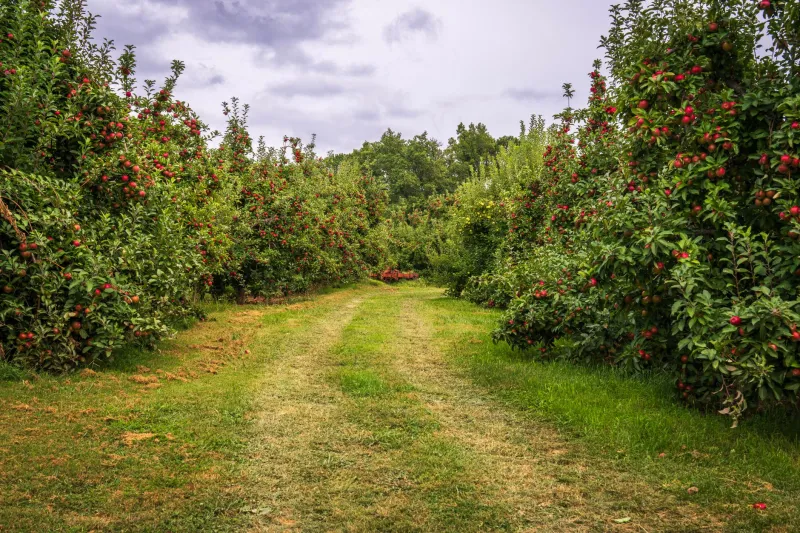
The old farmstead had been gone for decades. The house had collapsed inward sometime in the 1970s, and the barn had followed a few years later. The fields had grown over with cedar and sumac, and the lane that once connected the property to the county road was barely visible as a slight depression in the undergrowth. But in the corner of what had been the kitchen garden, one thing remained: a gnarled, half-dead apple tree, its bark furrowed like old leather, producing a small crop of fruit that nobody had named or catalogued in living memory.
Scenes like this play out quietly across rural America, on hillside properties in Virginia and West Virginia, along creek bottoms in the Ozarks, in the neglected corners of New England farmsteads that passed out of agricultural use generations ago. The trees are the last witnesses to a world of agricultural variety that has been almost entirely erased—not by catastrophe, but by the slow, grinding process of farm abandonment, land consolidation, and the narrowing of commercial fruit production to a handful of marketable varieties.
The people working to find these trees before they disappear entirely occupy a peculiar and passionate corner of the American heritage conservation community. They are part botanist, part historian, and part detective. And the stakes of their work, though rarely acknowledged in mainstream conservation discourse, are genuinely significant.
What Is a Ghost Orchard?
The term "ghost orchard" has gained currency among agricultural historians and heritage horticulturalists in recent years. It refers, broadly, to the remnant trees—and the cultural memory surrounding them—that persist after the farms, families, and communities that cultivated them have vanished.
In the nineteenth and early twentieth centuries, American farms commonly maintained diverse home orchards containing dozens of apple varieties, along with pears, quinces, cherries, plums, and peaches. Many of these varieties were locally developed, propagated through grafting across neighboring farms, and known only by regional names that were never formally registered. An apple called the "Sheepnose" in one county might be an entirely different variety from the "Sheepnose" known two counties over. The taxonomy was informal, the documentation sparse, and the genetic material irreplaceable.
When those farms were abandoned or transformed, the trees were often simply left in place. Some were bulldozed for development. Others were cleared for row crops or pasture. A fortunate few survived in fence lines, woodlot edges, and overgrown garden plots, fruiting every year for an audience of deer and groundhogs, their identities entirely unknown.
The Hunters: Who Does This Work and Why
The effort to identify and preserve these remnant varieties draws a diverse and dedicated community. University extension programs, notably those at Cornell and Virginia Tech, have conducted formal surveys of historic orchard sites in their respective regions. The Appalachian heirloom apple revival has attracted particular attention, given the extraordinary density of locally developed varieties that once characterized the mountain farming culture of that region.
Organizations such as the Temperate Orchard Conservancy in Oregon and Seed Savers Exchange in Iowa maintain living collections of heirloom fruit varieties, accepting scion wood—small cuttings used for grafting—from anyone who believes they have found something unusual. These collections function as living seed banks, preserving genetic material that could otherwise be lost permanently when the last original tree dies.
But much of the most consequential work happens at the individual level. Amateur enthusiasts, often motivated by family history or regional pride, spend weekends walking old farm properties with landowner permission, collecting fruit samples, and photographing tree characteristics. They submit samples to pomologists—fruit specialists—for comparison against historical variety descriptions in nineteenth-century agricultural journals and nursery catalogues. The process is painstaking and frequently inconclusive, but when a match is confirmed, the result is something genuinely remarkable: the recovery of a living piece of agricultural history.
One well-documented case involved the rediscovery of the Hewes Crab apple, a variety prized in colonial Virginia for its exceptional cider-making qualities and believed by some historians to have been grown at Monticello. Scion wood collected from a surviving tree in the Virginia Piedmont allowed the variety to be propagated and reintroduced into heritage cider production—connecting a living tree to a documented history stretching back more than two centuries.
Why Variety Matters Beyond Nostalgia
It would be easy to frame the heirloom fruit revival as a sentimental project—a longing for a lost agricultural past that has limited practical relevance to modern farming. That framing would be mistaken.
Genetic diversity within fruit species is an agricultural resource of genuine and measurable value. Commercial apple production in the United States is dominated by a small number of varieties, many of them selected primarily for appearance, shelf life, and shipping durability rather than flavor, disease resistance, or climate adaptability. This narrow genetic base creates real vulnerabilities to pests, pathogens, and the changing climate conditions that are already reshaping agricultural zones across the country.
Heirloom varieties, by contrast, represent centuries of informal selection under diverse conditions. Some exhibit resistance to fungal diseases that plague modern orchards. Others demonstrate tolerance for late frosts, drought, or heavy clay soils. A variety that was abandoned because it bruised too easily for commercial shipping may carry genetic traits of enormous value to a plant breeder developing the next generation of disease-resistant rootstocks.
The loss of these varieties is not merely a cultural loss. It is a narrowing of agricultural possibility.
How Travelers and History Enthusiasts Can Participate
For visitors drawn to agricultural heritage tourism, the world of heirloom fruit preservation offers several meaningful points of entry.
A growing number of heritage orchards and living history farms maintain collections of documented heirloom varieties open to visitors. Albemarle CiderWorks in Virginia, for example, cultivates historic Virginia apple varieties and offers tours that connect the orchard directly to the region's cider-making history. Seed Savers Exchange operates a heritage orchard at its Heritage Farm in Decorah, Iowa, where visitors can walk among trees representing hundreds of documented heirloom varieties.
For those with a more investigative inclination, local historical societies and county agricultural extension offices can often provide records of historic nursery orders, farm inventories, and orchard surveys that identify what varieties were once grown in a given region. Old farm account books, when they survive in county archives or university special collections, sometimes list specific variety names purchased from nurseries—a paper trail that can guide a search for surviving trees.
Learning basic grafting technique is perhaps the most direct form of participation available to the heritage-minded amateur. Scion wood from a confirmed heirloom variety, grafted onto a compatible rootstock, produces a genetically identical tree within a few seasons. That act of propagation—simple in execution, profound in implication—is how agricultural heritage moves from the past into the future.
The Memory Held in Wood
There is something deeply resonant about a fruit tree as a form of historical evidence. Unlike a document or a photograph, a living tree carries its history in its cellular structure, its flavor compounds, its disease responses, and its seasonal rhythms. When an agricultural archaeologist takes a cutting from a tree that has been fruiting in an abandoned fence line since the 1880s, they are handling a living artifact—one that connects, through an unbroken chain of biological continuity, to the farmer who first planted it.
For a heritage tourism site rooted in the belief that land and memory are inseparable, few subjects carry that conviction more literally than the ghost orchards of rural America. The trees remember what the records have forgotten. And the people searching for them are doing the essential, unglamorous work of keeping that memory alive.