Seeds of Knowledge: How Historic Farms Are Teaching the Next Generation to Remember the Land
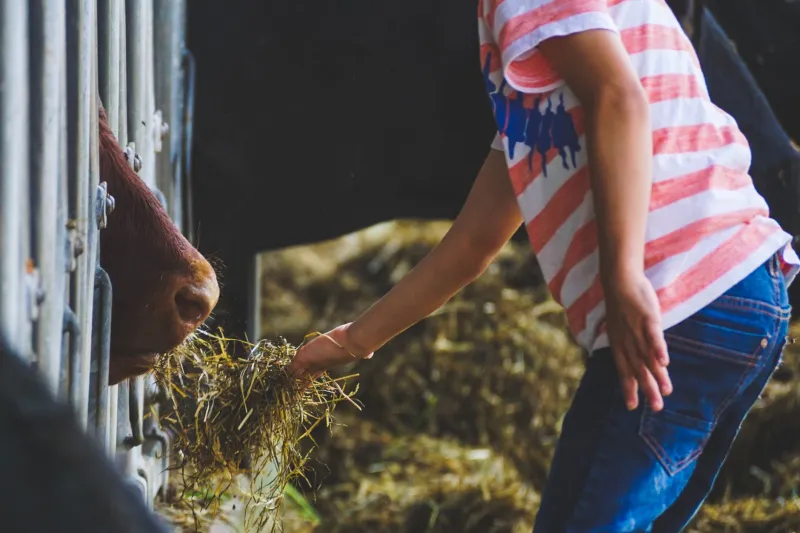
On a brisk October morning at a working heritage farm in the Shenandoah Valley of Virginia, a group of fourth-graders stands in a field of Bloody Butcher corn—a deep-red, open-pollinated variety that Virginia farmers have cultivated since at least the early nineteenth century. Their teacher has prepared them with classroom readings. They know, in the abstract, that this corn predates hybrid varieties by generations. But it is only when a child reaches out and pulls an ear from the stalk, feeling the weight of it, examining the dark burgundy kernels with her own hands, that the knowledge becomes real in a way that endures.
This is the premise underlying a quietly expanding movement in American heritage tourism: that historic farm properties, when thoughtfully managed as educational environments, offer a quality of learning that is qualitatively different from—and in important respects superior to—conventional classroom instruction. The experience is sensory, participatory, and rooted in place. It connects abstract historical knowledge to physical reality. And for many children, it constitutes their first genuine encounter with where food comes from and how the people who preceded them on this continent actually lived.
The Case for Experiential Heritage Learning
Educators and cultural historians have long argued that experiential learning—learning by doing, rather than by reading or listening—produces deeper retention and more durable understanding. When applied to agricultural and rural history, this principle takes on particular force, because so much of what defined pre-industrial farm life was embodied knowledge: the feel of properly turned soil, the rhythm of hand-milking, the patience required to tend a kitchen garden through an entire growing season.
Conventional historical education tends to present agricultural history as a backdrop to political and economic narratives. The farm appears as a setting rather than a subject, and the labor of farmers is acknowledged rather than understood. Heritage farm programs invert this hierarchy. At sites such as Conner Prairie Interactive History Park in Fishers, Indiana, or the living history farms operated by Colonial Williamsburg's agricultural program in Virginia, the farm itself is the curriculum. Visitors do not observe history from a distance; they participate in it, however briefly.
Research in museum education supports the effectiveness of this approach. Studies conducted by the Institute for Learning Innovation and by several university extension programs have found that students who participate in hands-on agricultural heritage experiences demonstrate significantly stronger recall of historical content than peers who receive equivalent information through traditional instruction. More importantly, they report greater personal connection to the material—a sense that history belongs to them, rather than being something that happened to other people in other times.
Profiles in Practice
The range of programming offered at historic farm sites across the country has grown considerably in sophistication over the past two decades. What was once limited to hay rides and pumpkin patches has evolved into structured educational experiences that meet state curriculum standards while remaining genuinely engaging.
At Polyface Farm in Augusta County, Virginia—a property that has become something of a pilgrimage site for sustainable agriculture advocates—educational visitors observe and participate in rotational grazing practices that echo, in their ecological logic, the land management traditions of the farm's earlier generations. The program is careful to distinguish between nostalgia and knowledge: the goal is not to romanticize the past, but to recover practical wisdom that industrial agriculture discarded.
In the upper Midwest, several farms affiliated with the Seed Savers Exchange in Decorah, Iowa, offer school group programs centered on heirloom seed cultivation and the history of plant genetics in American agriculture. Students learn to identify varieties by their morphological characteristics, practice seed-saving techniques, and hear the stories of the immigrant families who carried these varieties from Europe and elsewhere to the American heartland. The experience connects botany, history, and cultural identity in a single afternoon.
In the South, historic plantation sites that have undertaken the difficult but necessary work of interpreting the full history of their properties—including the enslaved labor that sustained them—are developing agricultural heritage programs that address that history honestly while also honoring the agricultural knowledge and cultural contributions of the people who were forced to work the land. These programs represent some of the most challenging and most important work being done in heritage education today.
What Makes These Programs Work
Not all farm-based educational programs are equally effective, and practitioners in the field have developed a fairly clear understanding of what distinguishes the memorable from the merely pleasant.
First, authentic materiality matters. Programs that use actual heritage breed animals—Ossabaw Island hogs, Milking Devon cattle, Dominique chickens—rather than generic farm animals provide visitors with a tangible connection to historical agricultural practice that generic livestock cannot offer. Similarly, programs built around genuine heirloom crop varieties, rather than modern substitutes, carry a specificity and historical integrity that visitors, even young ones, can perceive.
Second, narrative context is essential. The most effective programs embed their hands-on activities within a coherent historical story. Participants are not simply feeding animals or planting seeds; they are doing what a particular kind of farmer, in a particular place and time, would have done—and they understand why. This narrative scaffolding transforms activity into meaning.
Third, the physical environment of the farm itself must be preserved with sufficient integrity to support the educational experience. A historic farm program conducted against a backdrop of modern outbuildings and manicured landscaping loses much of its power. The worn boards of a nineteenth-century barn, the hand-laid stone of a field wall, the slight depression in the earth where a root cellar once stood—these details authenticate the experience in ways that no interpretive signage can fully replicate.
The Economic Dimension
For rural communities facing persistent economic pressure, heritage farm education programs offer a form of cultural tourism that generates revenue while reinforcing rather than commodifying local identity. School group visits, family weekend programs, and adult heritage workshops all contribute to the economic sustainability of historic properties that might otherwise struggle to justify their preservation costs.
Several state agricultural extension services have documented the multiplier effects of heritage agritourism on rural economies: visitors who come for an educational farm experience frequently spend additional dollars at local restaurants, lodging, and retail establishments. The economic case for investing in high-quality heritage education programming is, in many regions, quite compelling.
A Living Inheritance
What these programs offer, at their best, is something that transcends both education and tourism. They offer continuity—a living thread connecting the present generation to the generations that cleared, planted, tended, and were shaped by the American land. The child who pulls an ear of Bloody Butcher corn from a Virginia field in October carries something home that is more than a souvenir. She carries the beginning of a memory, and with it, the possibility that the knowledge encoded in that ancient variety will not be entirely lost.
That is, finally, what historic farm sites exist to transmit: not facts about the past, but a felt sense of connection to it. The land remembers. The work of these programs is to help the next generation remember too.