The Empty Threshold: Understanding Why America's Farm Children Left — and What Their Departure Cost the Land
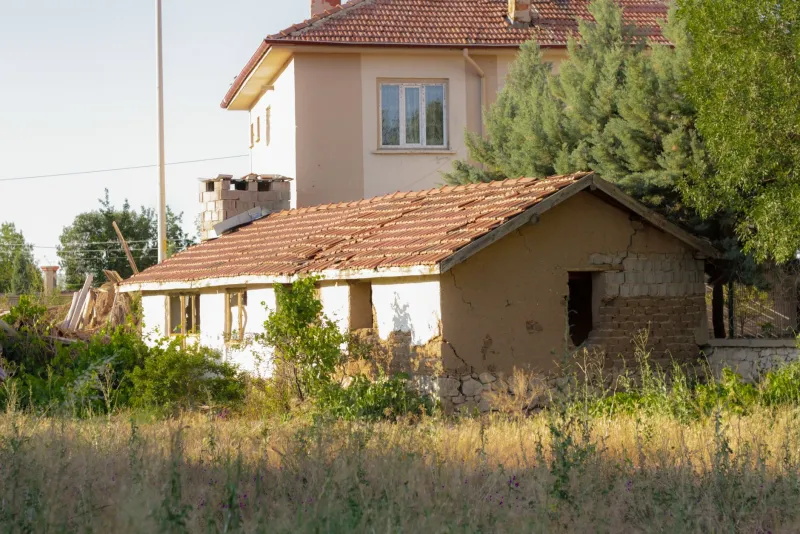
The farmhouse stands on a county road in central Ohio, its porch roof listing, its windows long since boarded. A century of names appear in the deed records at the county courthouse — the same surname repeating through transfers and inheritances, generation to generation, until a date in the mid-1960s when the name changes entirely and the acreage is absorbed into a larger operation. The family that farmed that ground for a hundred years is not gone. Their descendants live in Columbus, in Cleveland, in Phoenix. They simply did not come back.
This pattern, repeated across tens of thousands of rural properties throughout the twentieth century, represents one of the most consequential and least sentimentally examined chapters in American agricultural history. The rural out-migration of the past century has been documented statistically — farm population as a percentage of total US population fell from roughly 30 percent in 1920 to less than 2 percent today — but the human texture of that departure, the specific conversations, conflicts, and calculations that led individual young people to choose the city over the land, has received far less sustained attention.
Heritage farms and rural cultural institutions are increasingly confronting this history, and finding that doing so honestly requires setting aside the comfortable mythology of the American farm family in favor of something more complicated and more truthful.
The Arithmetic of Departure
To understand why farm children left, one must first understand what staying required. The economic arithmetic of the small family farm in the early and middle twentieth century was, for many families, simply brutal. Farm income was volatile, subject to weather, commodity price fluctuations, and the shifting demands of distant markets over which the individual farmer had no influence whatsoever. The costs of maintaining equipment, servicing debt, and meeting property tax obligations were fixed and relentless. In lean years — and there were many, particularly during the agricultural depression of the 1920s and the broader collapse of the 1930s — farm families endured privations that their urban counterparts, however poor, generally did not face.
For a young person coming of age on such a farm in the 1930s or 1940s, the calculation was not abstract. It was visible in the exhaustion of parents who worked from before dawn until after dark for returns that barely covered costs. It was present in the schoolbooks that arrived used and outdated, in the absence of electricity and running water that persisted on many rural properties until the Rural Electrification Administration's programs began to reach them. It was audible in the stories that came back from cousins and neighbors who had gone to work in Detroit's automobile plants or Chicago's stockyards and were earning wages that seemed, by rural standards, almost incomprehensible.
The decision to leave was, in many cases, not a rejection of the land itself but a rational response to an economic structure that the individual farm family was powerless to alter.
Education and the Widening World
Alongside economic pressure, the expansion of educational opportunity played a transformative role in rural out-migration. The consolidation of rural school districts beginning in the early twentieth century, which replaced the one-room schoolhouse with larger graded schools accessible by bus, brought farm children into sustained contact with a broader curriculum and, crucially, with teachers who encouraged the academically able to pursue higher education.
For many farm families, the first child to attend college represented a genuine achievement — evidence that the sacrifices of farming had produced something lasting. Yet the logic of that achievement carried an internal contradiction. A young woman who earned a teaching certificate or a young man who completed an agricultural college degree was, almost by definition, equipped for a life that the home farm could not fully accommodate. The education that the farm had financed was also the education that would take the child away.
Oral histories collected from rural communities across the Midwest and South reveal a recurring emotional dynamic: parents who had worked and saved to send a child to college, who genuinely celebrated that child's educational success, and who nonetheless experienced the child's subsequent departure as a loss that they found difficult to name or express. The pride and the grief coexisted, often without resolution.
The Silence in the Family Record
What makes rural out-migration particularly challenging to interpret historically is the degree to which it was accompanied by silence. Families did not, as a rule, write extensively about the decision to leave the land, or about the conflicts that decision generated. Farm journals recorded weather, crop yields, livestock births, and equipment purchases. They did not typically record the conversation in which a son announced that he would not be returning after his military discharge, or the letter in which a daughter explained that she had accepted a position in a city school and would not be coming home to help with the harvest.
The silences in the family record are, in this sense, as historically significant as the entries. They mark the boundaries of what could be articulated within the emotional and cultural vocabulary of rural family life — a vocabulary that prized stoicism, practical competence, and continuity, and had limited resources for processing rupture and loss.
Local historians and heritage researchers who have worked with rural families on memoir and oral history projects frequently report encountering this reticence. The departure of children from the farm is a subject that many elderly rural residents will discuss only obliquely, if at all. It is not that the experience was unimportant; it is that it was, for many families, too important and too painful to have been fully processed even decades later.
What Heritage Communities Are Doing
A number of heritage farm sites and rural cultural organizations have begun developing interpretive programs that address out-migration directly, resisting the temptation to present agricultural history as an unbroken narrative of stewardship and continuity. These programs take several forms.
Some heritage farms have created documentary exhibitions drawing on local deed records, census data, and collected oral histories to trace the specific migration patterns of families connected to their properties. By mapping where farm children went — which cities, which industries, which new lives — these exhibitions make visible the human geography of rural depopulation in a way that aggregate statistics cannot.
Others have developed programming specifically designed to engage the descendants of farm families who left the land, inviting them to participate in the interpretation of properties their ancestors once worked. This approach recognizes that the heritage of a place belongs not only to those who stayed but to those who departed — and to their children and grandchildren, for whom the family farm may be a powerful but largely imaginary presence.
Perhaps most significantly, a small number of heritage farm communities have begun creating conditions under which younger people with family connections to agricultural land can return — not necessarily to farm full-time, but to maintain a meaningful relationship with the property and its history. Conservation easements, community-supported agriculture arrangements, and heritage tourism enterprises have all been used to create economic rationales for renewed engagement with land that might otherwise continue its trajectory toward complete disconnection from its family origins.
These efforts do not undo the departures of the past century. They do not restore the farmhouses that have been lost or recover the knowledge that was never transmitted. But they represent an honest engagement with a history that rural America has too often preferred to leave unexamined — the history not only of those who stayed and kept the land, but of those who left, and of everything that went with them when they crossed the threshold and did not return.