Lines in the Earth: How America's Historic Fences Defined Property, Power, and Place
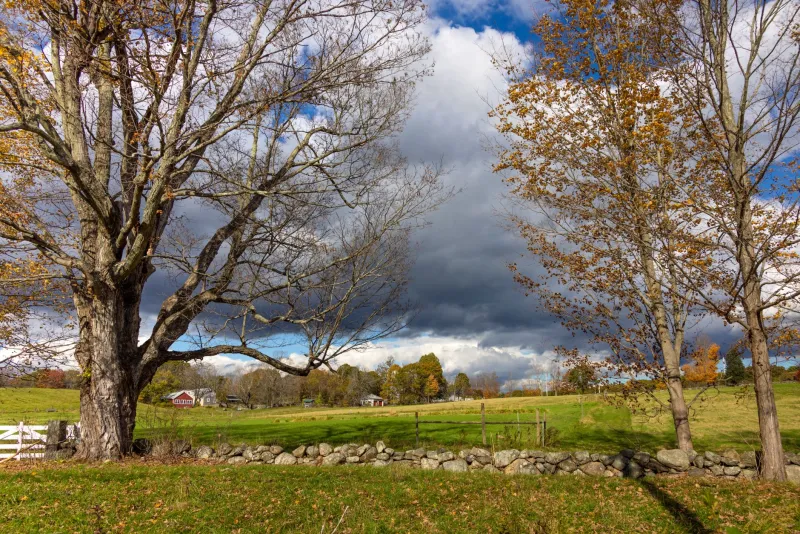
A fence is, at its most elemental, a declaration. It announces where one person's authority ends and another's begins, where the cultivated meets the wild, where the road gives way to private land. On the American agricultural landscape, that declaration took hundreds of forms across two centuries of rural settlement — stacked stone, split timber, woven wire, planted hedge — each form shaped by the materials at hand, the legal customs of the region, and the economic means of the farmer who built it.
To read the fences of a historic farm is to read the farm itself: its era, its region, its owner's prosperity or want, and the particular disputes — over wandering livestock, encroaching neighbors, and contested inheritance — that the fence was built to resolve. Heritage preservationists and agricultural historians are increasingly recognizing that fencing is not peripheral to the story of the American farmstead. In many respects, it is the story.
The Legal Weight of a Rail
The history of agricultural fencing in the United States cannot be understood apart from the legal frameworks that made fences necessary. Colonial and early American law in most jurisdictions placed the burden of livestock control not on the animal's owner but on the crop grower. Under the common law doctrine of the open range — which persisted in many southern and western states well into the twentieth century — a farmer whose corn was destroyed by a neighbor's cattle had no legal recourse unless that farmer had erected a legally sufficient fence to exclude the animals.
This legal structure had profound consequences for the landscape. It meant that fencing was not simply a convenience but a legal prerequisite for the protection of crops and, by extension, for the economic viability of the farm itself. Colonial-era statutes specified in considerable detail what constituted a lawful fence: minimum height, acceptable materials, required condition. Virginia's fence laws, for instance, were among the most elaborate in the colonial world, prescribing standards that shaped agricultural practice across the region for generations.
The shift from open-range to closed-range law — requiring livestock owners to fence their animals in rather than crop growers to fence them out — came gradually and unevenly across different states and territories. In Texas, the transition generated open conflict, most dramatically in the fence-cutting wars of the early 1880s, when small ranchers and farmers, shut out of open range by large operators' newly strung barbed wire, responded by destroying miles of fencing in nocturnal raids. The episode illuminates how profoundly a change in fencing law could restructure economic relationships and ignite genuine violence.
Regional Character, Regional Materials
The most immediately legible dimension of historic fencing is its regional variation. Each agricultural region of the United States developed fencing traditions shaped by the materials the landscape provided, the farming practices that prevailed, and the cultural inheritance of the settlers who arrived.
In New England, the defining agricultural boundary is the stone wall. Constructed by generations of farmers clearing glacially deposited fieldstone from their land, these walls represent an extraordinary investment of labor — estimates suggest that New England's colonial and early American farmers moved enough stone to build a wall encircling the earth several times over. The stone wall was not simply a boundary marker; it was the product of the clearing process itself, a way of converting an obstacle into an asset. Many of these walls survive today, running through second-growth forest on land that was farmed for a century and then abandoned, quiet witnesses to an agricultural past that the trees have largely swallowed.
In the Appalachian highlands and across much of the upland South, the prevailing fence tradition was the split-rail or worm fence, also called the Virginia worm or zigzag fence. Built from chestnut, oak, or cedar rails split from standing timber, these fences required no post holes and could be assembled and disassembled with relative ease — an advantage on farms where field boundaries shifted with crop rotation and land clearing. The chestnut blight of the early twentieth century, which eliminated the American chestnut as a timber resource, effectively ended the tradition of chestnut-rail fencing and removed from the landscape one of its most characteristic visual elements.
On the Great Plains, the transformation of the fencing landscape was sudden and total. Before the commercial introduction of barbed wire in the 1870s, the treeless plains presented an apparently insurmountable fencing problem: timber was scarce, stone largely absent, and the scale of landholding vast. Barbed wire resolved the problem with brutal efficiency. Within two decades of its introduction, millions of acres of open range had been enclosed, the cattle drives that had defined the post-Civil War plains economy had ended, and the visual and legal character of the western agricultural landscape had been permanently altered.
Class, Craft, and the Fence as Status Marker
Beyond their legal and practical functions, fences communicated social information with considerable precision. A well-maintained board fence painted white, enclosing a farmyard visible from the public road, announced prosperity and respectability to every passerby. A sagging worm fence, its rails beginning to rot, spoke of financial difficulty or simple neglect. The picket fence surrounding the farmhouse garden — a domestic boundary distinct from the agricultural fencing of fields and pastures — carried its own set of associations, signaling domesticity, refinement, and a certain aspiration toward the genteel.
The craft involved in constructing certain fence types also carried social weight. A well-laid New England stone wall, its stones fitted with the kind of precision that required both skill and patience, was the work of a farmer who either possessed that skill or could afford to hire someone who did. Pennsylvania German farmers, known for their meticulous farm management, were frequently observed by contemporaries to maintain the most carefully built and best-repaired fencing in their communities — a reputation that was understood, at the time, as a measure of character as much as agricultural competence.
Restoration and the Challenge of Authenticity
For heritage farms seeking to restore historically accurate fencing, the task involves considerably more than selecting appropriate materials. It requires understanding which fence type was actually used on a specific property in a specific period — a question that surviving maps, photographs, farm inventories, and deed descriptions can sometimes answer but often cannot.
Some heritage sites have invested substantially in this work. The Colonial Williamsburg Foundation maintains extensive reconstructed fencing based on documentary and archaeological evidence. Living history farms operated by state historical societies in Virginia, Ohio, and Minnesota have similarly worked to restore period-appropriate fencing as part of broader landscape interpretation programs. At these sites, the fence is treated not as backdrop but as artifact — a structure that, properly interpreted, tells visitors something true and specific about the farm's history.
The challenge of sourcing authentic materials is genuine. American chestnut rails are no longer available. Certain traditional post-and-rail configurations require timber dimensions no longer produced by modern sawmills. Stone walls, where they survive, often require skilled dry-stone masons — a craft that has experienced a modest revival in New England but remains rare elsewhere.
Yet the effort is warranted. A landscape without its historic fencing is a landscape missing one of its most fundamental interpretive layers. The fence line is where the farm's legal history, its agricultural practice, its regional identity, and its social meaning all converge in a single, legible structure. To restore it is to restore a dimension of the past that no amount of indoor interpretation can fully replace.