Where Learning Met the Land: The Enduring Legacy of America's Rural One-Room Schoolhouses
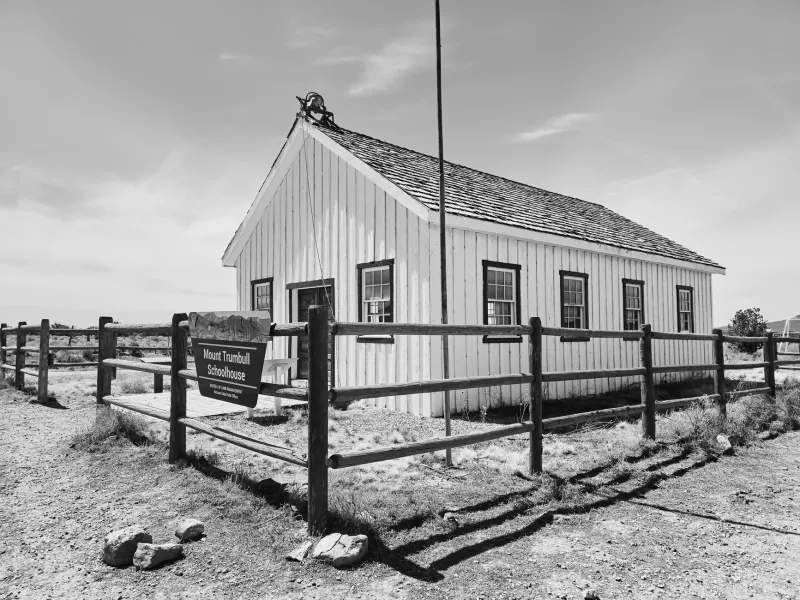
On the edge of a harvested cornfield in central Illinois, a small white clapboard building sits in careful restoration, its bell tower newly repaired and its interior smelling faintly of pine oil and old wood. For nearly a century, children from neighboring farms walked dusty lanes to gather within its walls — arriving with muddy boots, lunch pails packed by mothers who had risen before dawn, and minds shaped by the particular discipline of agricultural seasons. This is not a museum curiosity. It is a document, as revealing in its way as any deed or ledger, of how rural America once educated itself and, in doing so, preserved a way of life.
The one-room schoolhouse is among the most recognizable symbols of American rural heritage, yet its deeper significance to farming communities is frequently underappreciated. It was not merely a place where children learned to read. It was a cultural institution that reinforced the values, rhythms, and shared knowledge upon which agricultural communities depended for survival.
A Classroom Shaped by the Calendar
Perhaps nothing distinguishes the rural schoolhouse experience more clearly from its urban counterpart than the degree to which the agricultural calendar governed daily life within it. School terms were structured around planting and harvest, not administrative convenience. In many regions, the school year split into two sessions — a short winter term when fields lay dormant and a brief autumn term before the heaviest harvest labor began — leaving spring and summer largely uninterrupted for farm work.
Children as young as six were expected to contribute meaningfully to their family's operations, and teachers understood this implicitly. Attendance was irregular, governed by weather, planting urgency, and the simple reality that a family's economic survival sometimes outweighed a day's schooling. Far from undermining the educational enterprise, this arrangement reinforced a fundamental lesson: that knowledge and labor were not separate domains but deeply interwoven obligations.
The schoolhouse calendar also meant that the children who gathered within those walls represented a wide range of ages and abilities, often spanning six to sixteen years of age within a single room. Older students routinely assisted younger ones, a practice that cultivated patience, communication, and a sense of communal responsibility — qualities as essential to farm life as any technical skill.
Agriculture as Curriculum
Formal agricultural instruction in rural schoolhouses varied considerably by region and era, but the subject was rarely absent from the educational experience, even when it did not appear explicitly in the curriculum. Geography lessons drew on the landscapes children knew from daily life. Arithmetic was practiced through problems involving bushels, acres, and livestock prices. Nature study — a precursor to modern science education — introduced students to soil composition, plant biology, and animal husbandry in terms that connected directly to their families' livelihoods.
By the late nineteenth and early twentieth centuries, progressive educators and federal agricultural agencies began formalizing this connection. The introduction of school gardens became widespread across rural districts, particularly following the influence of the Country Life Movement, which sought to elevate the intellectual and cultural standing of agricultural communities. Students cultivated small plots adjacent to schoolhouses, learning through direct practice how to prepare soil, select seed varieties, manage growth cycles, and evaluate yields — a curriculum that was simultaneously scientific, practical, and deeply rooted in the heritage of the land.
In states such as Iowa, Minnesota, and Kansas, agricultural reading books and farm-specific primers were distributed to rural schools, acknowledging that the children of farming families required an education calibrated to their actual circumstances. These materials are now considered significant primary sources for historians studying how agricultural knowledge was formally transmitted across generations.
The Schoolhouse as Community Anchor
Beyond formal instruction, the one-room schoolhouse served as one of the primary gathering places for rural communities that might otherwise have had little organized social infrastructure. In many townships, the schoolhouse doubled as a meeting hall for civic discussions, a venue for community suppers and holiday programs, and occasionally a site for religious services when no church building existed within reasonable distance.
This multifunctional role gave the schoolhouse an outsized importance in the social fabric of farming communities. The annual school exhibition — an end-of-term performance in which students recited, debated, and demonstrated their learning before assembled families — was among the most significant community events of the year. It was an occasion for parents to witness what their children had absorbed, for neighbors to reaffirm their shared investment in the next generation, and for the community to celebrate its own continuity.
Teachers, who were often young women newly graduated from normal schools and frequently boarding with local farm families, occupied a peculiar and respected position within these communities. They were outsiders who became insiders, absorbing the customs and concerns of agricultural life while bringing to it a perspective formed elsewhere. Their diaries and letters, where they survive, offer some of the most vivid accounts available of everyday rural experience in nineteenth and early twentieth-century America.
What Survives, and Why It Matters
Estimates suggest that well over two hundred thousand one-room schoolhouses once dotted the American countryside. The wave of school consolidation that accelerated through the mid-twentieth century rendered the vast majority obsolete, and most were subsequently demolished, repurposed as storage buildings, or simply abandoned to the elements. What remains represents a fraction of what once existed — yet that fraction is considerable, and the effort to preserve it has gathered meaningful momentum in recent decades.
Organizations such as the Rural School and Community Trust and numerous state historical societies have worked alongside local preservation groups to document, stabilize, and interpret surviving schoolhouse structures. In several states, restored schoolhouses have been incorporated into heritage farm sites, where living history programs allow visitors to experience reconstructed lessons, examine period textbooks, and understand the educational world that farming children once inhabited.
The Little Red Schoolhouse Nature Center outside Chicago, the one-room schoolhouses preserved within Living History Farms in Urbandale, Iowa, and the restored district schools maintained by the Minnesota Historical Society all represent efforts to situate these buildings within their proper agricultural and community context — not as isolated curiosities, but as components of a larger rural landscape that shaped American identity in fundamental ways.
Reading the Building Itself
For heritage travelers and preservation advocates, the surviving schoolhouse building rewards careful attention. The placement of the structure at the edge of a field rather than at its center was rarely accidental — it preserved productive agricultural land while remaining accessible to children traveling from multiple directions. The orientation of windows, designed to maximize natural light for reading without creating glare, reflects a practical intelligence born of necessity. Outhouses, woodsheds, and the small barn or hitching post that sometimes accompanied the main building speak to the logistical realities of a world in which children arrived on horseback or on foot across considerable distances.
Interior details — the arrangement of recitation benches, the placement of the teacher's desk, the presence of a hand pump or water bucket — encode the social hierarchies and daily routines of rural educational life. Where original furnishings, slates, or instructional materials survive, they constitute primary evidence of a pedagogical culture that placed the child within a web of community, land, and seasonal obligation.
A Heritage Worth Preserving
The one-room schoolhouse endures in American memory partly as nostalgia and partly as myth. What heritage preservation work reveals, however, is something more substantive: a genuine institution that performed an essential and irreplaceable function in the life of agricultural communities. It transmitted knowledge, reinforced identity, and cultivated the social bonds upon which farming families depended across generations of seasonal labor and shared circumstance.
To stand inside a restored rural schoolhouse — to trace the carved initials on a desktop or read the faded script of a penmanship lesson on a surviving slate board — is to encounter the agricultural past not through the grand narratives of policy or economics, but through the intimate scale of a child's daily experience. That intimacy is precisely what makes these buildings irreplaceable, and precisely why the effort to preserve them deserves the attention of every traveler who cares about the land and those who learned to love it.