Keeping the Deed and the Dream: Creative Financing Strategies That Are Saving America's Historic Farms
The Weight of History on Working Land
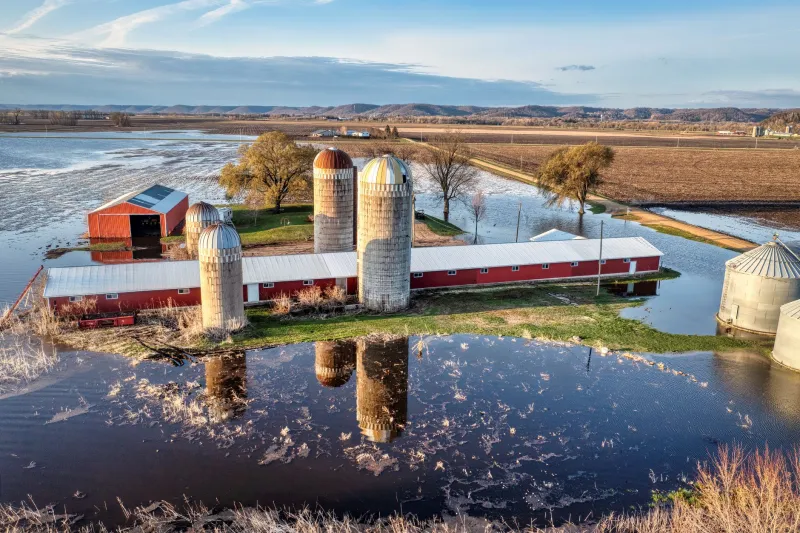
There is a particular kind of grief that settles over a farmstead when the auction sign goes up. The barn that sheltered three generations of livestock, the fieldstone foundation of the original homestead, the orchard planted by a great-grandmother who arrived with little more than ambition — all of it subject to the cold arithmetic of debt and market pressure. Across the American countryside, this scenario is playing out with troubling frequency, and the historic record is being lost alongside the land itself.
Yet something notable is also happening in the margins of this crisis. Rural communities, preservation organizations, and forward-thinking financial institutions are assembling a toolkit of creative strategies that are, in a growing number of cases, keeping historic farms intact and economically viable. The solutions are rarely simple, and the tensions between conservation goals and economic reality are genuine. But the outcomes, when they work, offer a compelling model for the broader challenge of rural heritage preservation.
Conservation Easements: Giving Up Rights to Keep the Land
Among the most widely adopted tools in the preservation arsenal is the conservation easement — a voluntary legal agreement through which a landowner permanently restricts certain uses of their property in exchange for a payment or significant tax benefit. For historic farms, this instrument can be particularly well-suited. A family might deed away the right to subdivide their acreage or demolish historic structures while retaining full ownership and the ability to continue farming.
In Virginia's Shenandoah Valley, the Preservation Trust of Virginia has facilitated dozens of such agreements on properties that carry both agricultural and architectural significance. One family, whose farm dates to the 1780s and includes a documented pre-Civil War outbuilding complex, used the federal income tax deduction generated by their easement donation to retire outstanding operating debt. The farm remains in active production today.
The financial mechanics deserve careful attention. Under current federal law, a qualified conservation contribution can generate a deduction of up to 50 percent of a donor's adjusted gross income, with a 15-year carryforward for unused deductions. For farming families with modest annual incomes but substantial land assets, this provision can translate into meaningful, multi-year tax relief — relief that can mean the difference between holding on and selling out.
Federal and State Grant Programs: Navigating the Landscape
Beyond easements, a patchwork of grant programs at the federal and state levels has emerged as a critical funding source for preservation work. The United States Department of Agriculture's Historic Barn Preservation Grant program, administered through state departments of agriculture in participating states, provides matching funds for the rehabilitation of agricultural structures listed on or eligible for the National Register of Historic Places. Several states, including Pennsylvania, New York, and Wisconsin, have developed their own parallel programs with varying eligibility requirements and funding caps.
The application processes for these grants are not trivial. Families frequently describe the paperwork burden as formidable, and the competition for limited funds is intense. Organizations such as the National Trust for Historic Preservation and regional land trusts have responded by developing technical assistance programs designed to help landowners navigate the application landscape. In some cases, preservation nonprofits will co-apply with farm families, lending their administrative capacity in exchange for a formal preservation covenant on the property.
For properties with documented agricultural history, the Historic Preservation Fund's Underrepresented Community Grant program has also become a meaningful resource — particularly for farms associated with communities whose heritage has received insufficient recognition in the broader preservation record.
Public-Private Partnerships: When the Community Has a Stake
Some of the most instructive case studies in farm preservation involve arrangements that go beyond the individual landowner to engage the surrounding community as an active stakeholder. In Lancaster County, Pennsylvania, a collaboration between a local heritage organization, a regional bank offering below-market preservation loans, and the county government produced a revolving loan fund specifically designed for historic agricultural properties. Farmers whose structures qualify for National Register listing can access capital at reduced interest rates for rehabilitation work, with repayment terms structured around agricultural cash-flow cycles rather than conventional amortization schedules.
This kind of patient capital — lending that acknowledges the rhythms of farming rather than imposing urban financial timelines — has proven essential in several successful projects. The Landmark Preservation Council of Illinois has pursued a similar model in partnership with community development financial institutions, targeting the state's significant inventory of German and Scandinavian immigrant farmsteads, many of which share the kind of vernacular architectural character that defines the heritage this publication documents.
Agritourism has also emerged as a viable revenue stream that can offset the costs of preservation. When a historic farm opens its doors to visitors — offering tours of restored structures, harvest experiences, or educational programming — it generates income that can fund ongoing maintenance while connecting the public to the agricultural past. The economic case for preservation, in these instances, becomes self-reinforcing.
The Tension That Remains
It would be misleading to suggest that these tools resolve all of the pressures facing farming families. Conservation easements are permanent, and not every family is prepared to accept restrictions that will bind their heirs indefinitely. Grant programs are competitive and inconsistently funded. Public-private partnerships require sustained organizational commitment that is not always available in sparsely populated rural counties.
Moreover, the very designation of a property as historically significant can complicate rather than simplify a family's financial situation, triggering additional regulatory scrutiny or raising the specter of unfunded rehabilitation mandates. Preservation advocates have learned, sometimes through difficult experience, that the conversation with landowners must begin with economic reality before it can arrive at historical significance.
What the most successful programs share is a recognition that preservation and agricultural viability are not competing goals but interdependent ones. A farm that cannot sustain itself economically will not remain intact long enough for its history to matter. The financing models that are working are those built on that foundational understanding — tools designed not to freeze a landscape in amber, but to keep it alive, productive, and connected to the communities that gave it meaning.