Lines Across the Land: What America's Historic Farm Fences Reveal About Property, Power, and Possibility
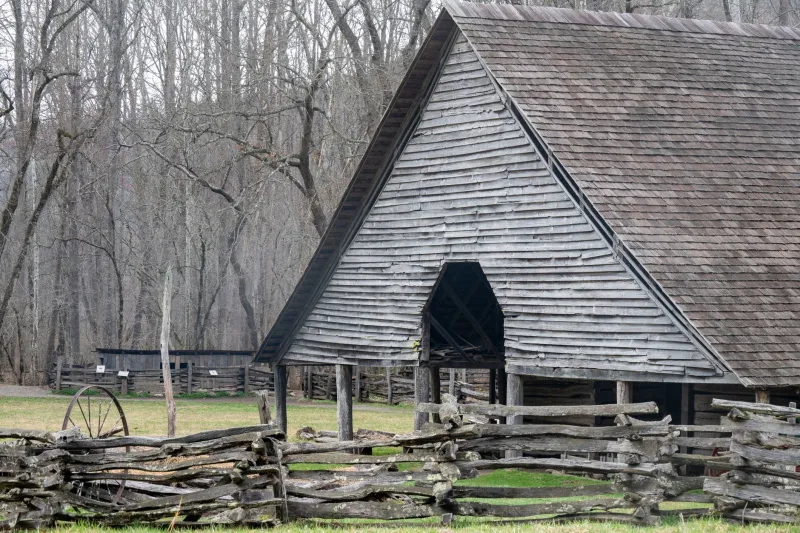
There is a particular kind of silence that settles along an old fence line in the late afternoon — a stillness broken only by the creak of weathered wood or the low hum of wind threading through rusted wire. To the casual eye, such a boundary may appear unremarkable, a practical division between one field and the next. Yet for the historian, the preservationist, and the heritage traveler willing to look closely, a fence is never merely a fence. It is a document. It is a declaration. In many cases, it is the physical residue of a dispute that shaped the destiny of an entire community.
Across the American countryside, from the glaciated plains of the upper Midwest to the red-clay hills of the Piedmont South, historic farm fences survive as one of the most underappreciated forms of landscape evidence available to those who study rural life. The materials chosen, the patterns of construction, the subtle deviations from a straight line — each element encodes information about land law, neighborly relations, economic cycles, and the cultural backgrounds of the people who built them. Walking a historic fence line, with the right knowledge in hand, becomes an act of reading.
The Law Behind the Line
Before a single post was driven into the ground, the placement of a farm fence was often determined not by the farmer's preference but by law. Colonial-era statutes governing fencing obligations varied widely across the original thirteen states, and as settlement moved westward, those variations multiplied. In the antebellum South, the "fence-out" doctrine prevailed in many jurisdictions, placing the burden on crop farmers to exclude roaming livestock rather than on livestock owners to contain their animals. This legal reality shaped the physical landscape in measurable ways: the South developed a tradition of elaborate, labor-intensive rail fencing designed to protect cultivated ground, while open-range customs persisted across vast stretches of the frontier.
The tension between these competing legal philosophies left its mark on actual farm properties that visitors can explore today. At heritage sites throughout Virginia and the Carolinas, the remnants of zigzagging split-rail fences — sometimes called "worm" or "snake" fences for their sinuous, overlapping pattern — speak directly to that era of open-range law. The style required no post holes and no nails, a practical advantage in a region where timber was abundant and labor was organized around enslaved workers. The fence's very construction method reflects the economic and social conditions under which it was built.
Material Choices as Cultural Biography
Perhaps no single variable in fence history carries more interpretive weight than the choice of material. Across different regions and time periods, the dominant fencing material on a given farm reveals a great deal about what resources were locally available, what cultural traditions the settlers carried with them, and what economic pressures they faced.
In the heavily forested Northeast and upper South, split-rail fencing from chestnut, oak, or locust dominated the early agricultural landscape. These materials were durable, required no manufactured components, and could be produced entirely from the farm's own timber reserves. The gradual disappearance of chestnut fencing after the blight of the early twentieth century is itself a story that heritage sites can tell — a biological catastrophe encoded in the very absence of a once-common wood.
On the treeless prairies of Kansas, Nebraska, and the Dakotas, the scarcity of timber forced settlers toward alternative solutions. Sod walls, stone fences constructed from glacial fieldstone, and eventually the revolutionary introduction of barbed wire in the 1870s each represent a distinct chapter in the ongoing negotiation between human ambition and environmental reality. The arrival of Joseph Glidden's barbed wire patent in 1874 did not merely solve a practical problem; it transformed the social geography of the American West, enabling the enclosure of ranges that had previously been held in common and precipitating conflicts — the so-called "fence-cutting wars" of the 1880s in Texas — that became central events in Western history.
Visitors to historic farms in the Texas Hill Country or the Flint Hills of Kansas who encounter stretches of original barbed wire fencing are standing at the intersection of technological innovation and social upheaval. The rusted strands are not decorative; they are evidence.
Reading Disputes in Deviations
One of the most compelling aspects of historic fence interpretation is what the irregularities reveal. A fence line that jogs unexpectedly, doubles back, or follows an oblique course across an otherwise rational landscape is almost invariably the product of a dispute — a contested survey, a negotiated compromise, or a legal judgment rendered by a county court long since dissolved.
In New England, where stone walls remain among the most visually distinctive features of the rural landscape, the patterns of construction often preserve evidence of boundary negotiations that unfolded over generations. A wall that changes character mid-course — shifting from carefully fitted granite to roughly stacked fieldstone — may mark the point at which one family's labor ended and another's began, or the moment when a property changed hands and a new owner brought different standards of craftsmanship to the shared boundary.
The stone walls of rural Massachusetts and Connecticut have attracted considerable scholarly attention in recent decades, and heritage farms throughout the region now incorporate fence-line interpretation into their visitor programming. Walking a stone wall with a knowledgeable guide transforms what might appear to be a simple property boundary into a multi-generational narrative of negotiation, conflict, and eventual settlement.
The Social Meaning of the Fence Gate
Beyond the fence itself, the placement and construction of gates offers another layer of interpretive richness. A well-made gate positioned at a road-facing boundary communicated prosperity and welcome. A gate that faced a neighbor's property rather than a public road suggested an ongoing relationship of exchange — a right-of-way granted, a path worn smooth by decades of mutual use. Some historic farm properties preserve evidence of gates that were later sealed, their posts remaining but their openings filled in, silent testimony to a relationship that had cooled or a dispute that had never been resolved.
At several heritage properties documented through agritourism programs in the mid-Atlantic states, the social history of neighborly relations can be traced almost entirely through the physical evidence of gates added, moved, or closed across the span of a farm's documented history.
An Invitation to Walk the Line
For the heritage traveler, the farm fence offers something that no museum exhibit can fully replicate: the experience of moving through history at a human pace. To walk the perimeter of a historic farm property — to follow a stone wall into the second-growth woodland that was once a meadow, to trace the course of a worm fence along what was once a contested boundary — is to engage with the past through the body as well as the mind.
Historic Kirche & Farm encourages visitors to approach the fence lines of the properties they explore with the same attention they might bring to a barn's timber frame or a farmhouse's architectural detail. Ask who built this fence, and why here. Ask what material was chosen, and what that choice reveals about the world in which the builder lived. Ask what the deviations and irregularities might mean.
The answers, written in wood and stone and wire across the American countryside, are waiting to be read.