Beyond the Harvest: How Heritage Farm Owners Are Building New Futures Without Abandoning the Past
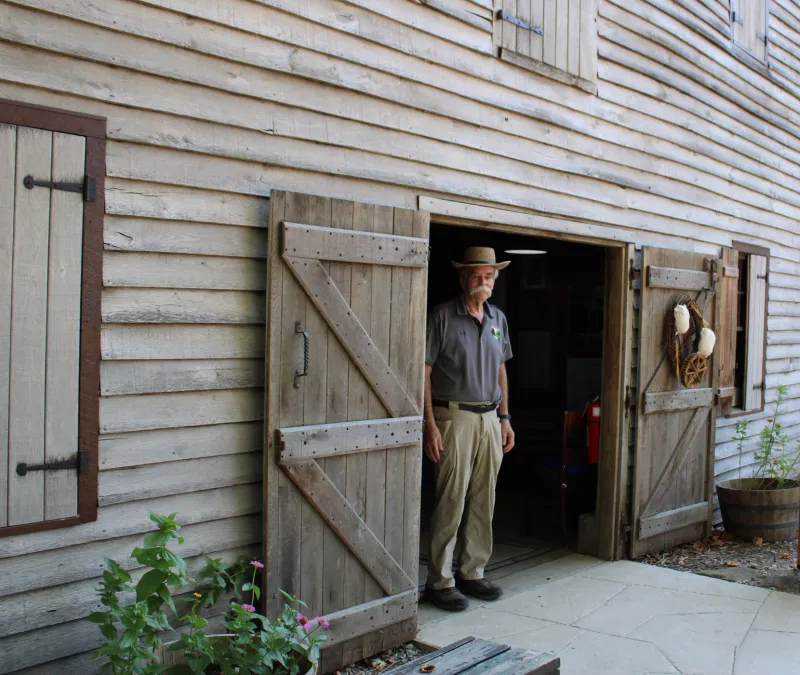
For generations, the measure of a working farm was straightforward: acreage planted, yields harvested, livestock raised. But across the United States, the definition of a viable farm is being rewritten — not in the fields, but in the guest rooms, the teaching kitchens, the candlelit barns, and the heritage gardens where visitors come not simply to observe, but to participate.
This transformation is not born of abandonment. It is, in many cases, an act of devotion — a determination by landowners and stewards to keep historic properties alive in a landscape where commodity agriculture alone rarely sustains a small family holding. The emergence of agritourism as a preservation strategy represents one of the more compelling developments in American rural heritage, and its implications extend well beyond economics.
When the Land Becomes the Curriculum
In the rolling hill country of central Virginia, one multigenerational farm family faced a familiar reckoning in the early 2010s: operating costs were rising, the next generation was uncertain, and the 1840s stone farmhouse at the property's center needed urgent structural attention. Rather than sell or subdivide, the family opened their doors — literally — by converting two outbuildings into overnight accommodations and launching a series of weekend workshops centered on traditional craft agriculture.
Guests now arrive to learn wool carding, hand-tool woodworking, and heritage seed saving. The farm's eighteenth-century springhouse has been restored not merely as a curiosity but as an active demonstration space, where visitors observe the cold-storage techniques their great-great-grandparents relied upon before mechanical refrigeration. Bookings have grown steadily each year, and the revenue has funded masonry repairs that preservation grants alone could not have covered.
This model — education as both mission and income — is appearing with increasing frequency across the country. From the limestone farmsteads of the Ohio River Valley to the tobacco-curing barns of the North Carolina Piedmont, heritage property operators are recognizing that knowledge itself is a draw. Visitors who might never have sought out a farm tour will drive considerable distances for an immersive, hands-on encounter with the past.
Culinary Experiences and the Power of the Farm Table
Food has emerged as one of agritourism's most potent connectors. Heritage farms that have integrated culinary programming into their offerings report not only strong visitor interest but meaningful engagement with the cultural and ethnic traditions embedded in regional agricultural history.
In southeastern Pennsylvania, a farmstead with documented roots in the German Reformed settlement of the early nineteenth century now hosts seasonal farm dinners prepared using heirloom varieties grown on-site and traditional preservation methods drawn from the community's foodways. The dinners are not merely meals; they are narrated experiences, guided by the farm's historian-in-residence, who contextualizes each dish within the agricultural and social history of the region.
This approach reflects a broader understanding that food is inseparable from place. The varieties grown, the methods employed, and the recipes passed down through farm households carry within them the accumulated knowledge of communities that shaped the American countryside. Presenting that knowledge in an accessible, sensory format creates a form of heritage tourism that is both intimate and intellectually substantive.
Living History and the Reenactment Tradition
Historical reenactment, long associated with battlefield sites and colonial villages, has found a natural home on the heritage farm. Several properties across the Midwest and Upper South now host seasonal living history events that reconstruct the rhythms of nineteenth-century agricultural life — plowing with draft horses, pressing sorghum, operating sweep-powered mills, and processing flax for linen.
These events serve multiple purposes simultaneously. They generate meaningful revenue, particularly during peak tourism seasons. They create documented records of traditional practices that might otherwise exist only in oral history. And they forge connections between contemporary visitors and the communities whose labor shaped the land they are standing on.
One farm in central Tennessee, which operates on property continuously cultivated since the 1790s, stages an annual autumn gathering that draws participants from across the region. Costumed interpreters demonstrate period techniques, but the event is deliberately structured to acknowledge the full history of the land — including the enslaved labor that built its earliest structures. This commitment to historical honesty, operators report, has deepened visitor trust rather than diminished it.
The Authenticity Question
For heritage farm operators, the transition to agritourism carries a persistent tension: how does one welcome paying guests without transforming a historic property into a performance of itself? This is not a theoretical concern. The pressure to aestheticize the past — to smooth its rougher edges and present a curated, comfortable version of agricultural history — is real and commercially significant.
The farms navigating this most successfully appear to share a common orientation: they treat historical authenticity not as a marketing claim but as an operational commitment. Structures are preserved using period-appropriate materials. Interpretation is grounded in primary research. The agricultural practices demonstrated are those that were actually practiced on that specific land, by specific communities, in specific historical circumstances.
This discipline requires investment — in archival research, in skilled preservation tradespeople, in knowledgeable interpreters. But it also produces a visitor experience that cannot be replicated by a themed attraction, precisely because it is irreducibly specific to a place and its history.
Community as Stakeholder
The most durable agritourism operations are those that understand themselves as embedded in, rather than separate from, their surrounding communities. Heritage farms that have cultivated relationships with local historical societies, tribal nations, agricultural extension offices, and regional food producers report not only broader programming capacity but greater resilience in the face of economic uncertainty.
When a farm in the Finger Lakes region of New York partnered with a neighboring Haudenosaunee cultural center to develop programming on the Indigenous agricultural traditions that preceded European settlement, the collaboration enriched both institutions. Visitor numbers increased, yes — but so did the depth and accuracy of the historical narrative being offered.
This is, ultimately, what distinguishes heritage agritourism from its more superficial counterparts: the recognition that the land carries layers of meaning, and that honoring those layers is not a burden but a source of genuine value. The farms that have grasped this principle are not merely surviving the twenty-first century. They are, in their quiet way, helping to define what it might mean to remember the land honestly.