Between the Pulpit and the Garden Gate: How Ministers' Wives Cultivated Rural Resilience One Seed at a Time
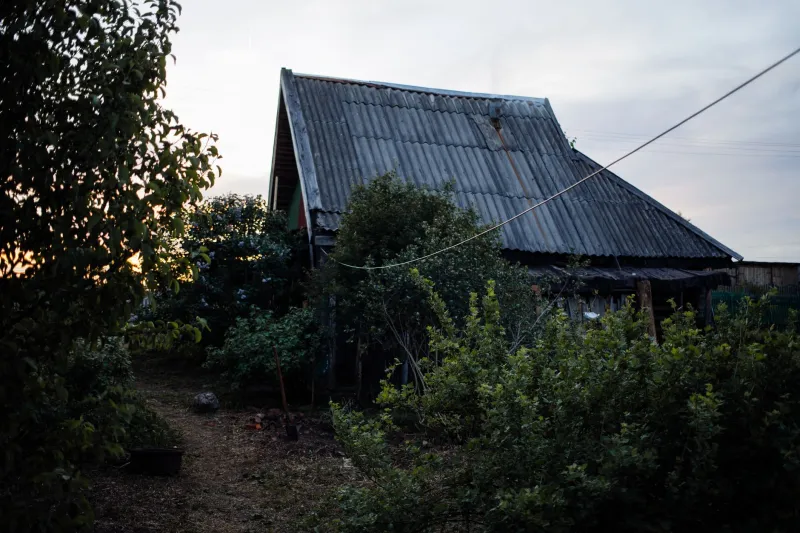
Long before the term "community garden" entered common usage, the parsonage garden served as both a larder and a living classroom for countless rural American communities. The women who tended these plots—wives of ministers stationed at small country churches—occupied a singular position between spiritual authority and practical necessity. Their contributions to agricultural knowledge, seed preservation, and neighborly exchange have been quietly overlooked for far too long.
Across the American countryside, from the limestone ridges of central Pennsylvania to the black-soil prairies of southern Illinois, parsonage properties once anchored entire communities. The church building drew the congregation together on Sundays; the adjacent garden sustained the household that made that congregation possible every other day of the week.
A Garden Between Two Worlds
The parsonage occupied a peculiar position in rural American life. It was neither entirely private nor fully public. The minister's family lived within it, but the community regarded it with a proprietary affection—and occasionally a proprietary expectation. The garden attached to that parsonage carried the same dual character.
For the minister's wife, the garden was not a pastoral hobby. It was an economic necessity dressed in the language of stewardship. Clerical salaries in rural parishes were notoriously modest throughout the nineteenth and early twentieth centuries, often supplemented by in-kind contributions from congregants—a bushel of corn here, a dressed hog there. The parsonage garden closed the gap that cash could not. Beans, squash, root vegetables, and herbs grown between the church and the woodlot fed the family through winter and provided surplus that could be exchanged, gifted, or quietly pressed into the hands of families who needed it more.
This quiet redistribution carried spiritual weight. Many ministers' wives understood their gardening work explicitly as a form of service, an extension of the pastoral mission that their husbands conducted from the pulpit. Surviving diaries and letters from parsonage households across the Midwest and South make this connection repeatedly. "I put up thirty jars of green beans today," wrote one Missouri minister's wife in 1903, "and sent eight of them to the Hendersons, who are not keeping well this season. The Lord provides through willing hands."
Seed Keepers and Knowledge Brokers
Beyond their role as providers, ministers' wives functioned as important nodes in the informal networks through which agricultural knowledge traveled across rural communities. A minister's circuit—or later his fixed parish—brought his household into contact with families from different regions, different ethnic backgrounds, and different farming traditions. His wife, receiving seeds, cuttings, and recipes as tokens of hospitality or friendship, became an inadvertent curator of agricultural diversity.
In German Lutheran and German Reformed communities across Ohio, Indiana, and Missouri, parsonage gardens were frequently the repositories of heirloom vegetable varieties brought from Europe by immigrant congregants who knew no one better suited to safeguard them than the minister's household. A particular strain of flat-leafed parsley, a sprawling pole bean with a German name no one could quite spell in English, a dense-headed cabbage suited to the making of sauerkraut—these varieties circulated through parsonage gardens for generations, preserved less by any formal intention than by the simple habits of careful women who saved what worked and shared what grew well.
Descendants of parsonage families interviewed for this article recall these seed-keeping practices with a vividness that suggests how deeply embedded they were in family memory. "My great-grandmother kept a tin box in the pantry," recalled one woman whose great-grandfather served a small Reformed congregation in rural Ohio from the 1890s through the 1920s. "Every fall she dried seeds from whatever had done best that year—tomatoes, peppers, the big German butterhead lettuce. She gave packets to any woman in the congregation who asked, and she always wrote the name on the packet in her own hand."
The Garden as a Site of Exchange
The reciprocity embedded in parsonage garden culture extended well beyond seeds. The minister's wife occupied a social position that made her a natural conduit for the exchange of culinary knowledge. Women who might have hesitated to share a recipe with a neighbor—wary of rivalry or the exposure of household scarcity—could offer the same recipe to the minister's wife without social risk. She, in turn, could pass it along to others under the neutral cover of her household's authority.
Church cookbooks, which proliferated across rural America from the late nineteenth century onward, often bear the fingerprints of this dynamic. Recipes attributed to parsonage households appear with unusual frequency in the cookbooks produced by congregations from Ohio to Texas. These contributions were not merely filler. They carried a subtle endorsement, a quiet signal that the dish in question had been tested and found worthy in a household that the whole community respected.
The gardens themselves hosted informal gatherings that served a social function distinct from the formal rhythms of church life. A woman stopping by the parsonage to return a borrowed preserving jar might find herself drawn into a conversation about the best time to put up tomatoes, or the correct proportion of vinegar in a cucumber brine. These exchanges, unremarkable in themselves, accumulated over years into a substantial body of shared agricultural knowledge that helped communities weather drought, crop failure, and the economic dislocations that periodically swept through rural America.
Surviving Properties and Living Memory
A number of historic parsonage properties survive across the United States, preserved either as part of active church complexes or as components of larger heritage sites. Several have been documented by state historic preservation offices, though the gardens themselves—ephemeral by nature—rarely appear in formal inventories. The structures endure; the cultivated ground around them is harder to read.
At a preserved Lutheran parsonage in rural Minnesota, a heritage garden project has been underway since the early 2010s, guided in part by oral histories collected from elderly descendants of the congregation. Volunteers have reestablished period-appropriate plantings based on a combination of archival records and family recollection, including several vegetable varieties that local seed-saving organizations helped source. The result is not a museum exhibit but a working garden, tended by volunteers and producing food that is shared with the congregation each summer—a practice that would have struck the original occupants as entirely natural.
Similar efforts are underway at a Methodist parsonage in rural Georgia and at a Mennonite farmstead complex in Lancaster County, Pennsylvania, where the parsonage garden has been continuously cultivated, in one form or another, for more than a century.
Why This History Matters
The parsonage garden stands as a small but telling example of how American rural communities built resilience through informal systems of knowledge exchange and mutual aid. The women who maintained these gardens were not recognized as agricultural innovators in their own time, and they have rarely been acknowledged as such since. Yet their work—patient, practical, and rooted in a deep sense of obligation to both their households and their neighbors—contributed materially to the survival of communities that had few other safety nets.
For those interested in the intersection of agricultural heritage and rural social history, the parsonage garden offers a productive lens through which to examine both. It is a site where the spiritual and the practical, the domestic and the communal, the individual and the collective, met and sustained one another across generations of American rural life. The soil between the garden gate and the church door holds more history than most of us have thought to look for.