Stones That Speak: How Forgotten Farm Cemetery Plots Are Reshaping What We Know About Rural American Life
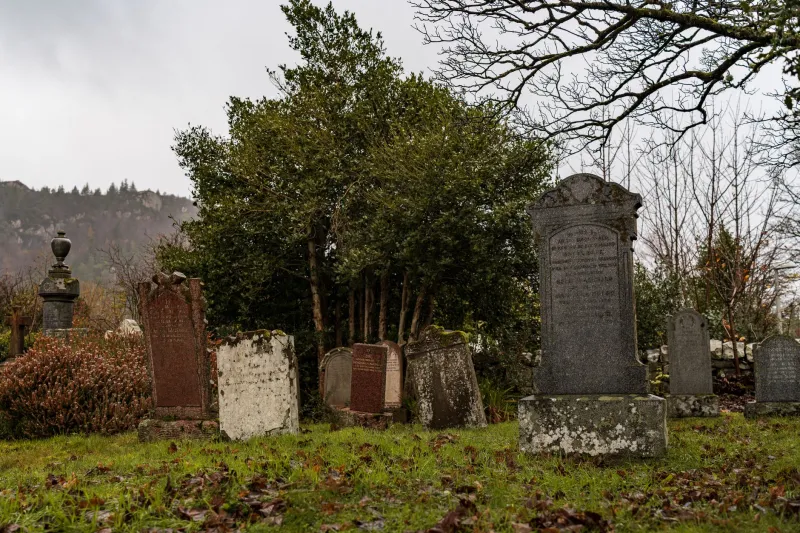
They are easy to miss. A cluster of fieldstone markers half-swallowed by blackberry cane. A rusted iron fence listing at the edge of a soybean field. A hand-chiseled name worn nearly smooth by two centuries of Ohio wind. Across the rural American landscape, thousands of private family burial grounds persist in a state somewhere between preservation and erasure—overlooked by official historical surveys, unrecorded in county archives, and yet carrying within their mossy inscriptions genealogical evidence of extraordinary depth and consequence.
For the genealogy researcher, the agritourism visitor, and the heritage preservation advocate alike, these farm cemeteries represent one of the last great untapped reservoirs of primary-source history in the United States. What they reveal, when documented with care and rigor, often challenges the official record in ways that are both humbling and revelatory.
The Gap Between the Courthouse and the Cornfield
American genealogical research has long depended on a familiar hierarchy of sources: census records, vital records, land deeds, probate filings. These documents are invaluable, but they share a structural limitation. They recorded the lives that the state chose to acknowledge. Entire categories of people—enslaved individuals, tenant farmers, indentured laborers, women who never held property in their own names, children who died before they could be enumerated—frequently appear in the official record only as footnotes, if they appear at all.
The farm cemetery, by contrast, operated outside that institutional framework. Burial was a community act, governed more by grief and custom than by bureaucratic procedure. A family might inter an enslaved worker beside their own kin, not out of equality, but out of proximity and practical necessity. An immigrant Lutheran congregation might consecrate a corner of farmland decades before a church building ever rose from the prairie soil. A Black homesteading family in post-Reconstruction Kansas might bury their dead in a plot that no county clerk ever formally registered, creating a record of presence that survives precisely because it was never subject to the whims of official documentation.
These burial grounds, in their very informality, preserved what the formal record discarded.
Citizen Historians and the Work of Recovery
The effort to locate, document, and interpret these hidden plots has accelerated meaningfully over the past two decades, driven largely by volunteer networks operating at the intersection of genealogy, local history, and digital technology. Organizations such as Find A Grave and BillionGraves have enabled ordinary researchers to photograph and transcribe headstone inscriptions at scale, creating searchable databases that would have been unimaginable to previous generations of family historians.
But the work extends well beyond transcription. In states including Indiana, Virginia, Tennessee, and Missouri—all of which possess dense concentrations of historic farm properties—county-level cemetery survey projects have deployed teams of volunteers equipped with GPS units and photographic equipment to walk fence lines and woodlot margins in systematic search of unmarked or poorly recorded burial sites. Their findings frequently contradict the official county cemetery registries, which in many jurisdictions were compiled hastily and incompletely during the mid-twentieth century.
In rural Virginia's Piedmont region, for example, volunteer surveyors affiliated with local historical societies have documented dozens of burial sites on former plantation properties where the graves of enslaved individuals were either omitted from historical records or recorded only as anonymous numerical entries. Ground-penetrating radar technology, increasingly accessible to preservation groups with modest grant funding, has further expanded the capacity to identify unmarked graves without disturbing the soil—allowing researchers to establish the probable scale of a burial population even where no stone markers survive.
The implications for genealogical research among African American families with roots in the antebellum South are profound. A single recovered burial site, cross-referenced with plantation inventories, freedmen's bureau records, and oral family histories, can sometimes resolve genealogical questions that have resisted decades of conventional archival research.
Immigrant Communities and Consecrated Ground
The story of farm cemetery documentation is not solely one of racial injustice and its legacies, though that thread runs through it with particular urgency. Equally significant is what these burial grounds reveal about the ethnic and religious geography of agricultural America.
In the upper Midwest, German Lutheran and Norwegian Lutheran immigrant communities frequently established burial grounds on or adjacent to farmland years before formal church organization occurred. These plots, sometimes maintained by a single extended family and sometimes shared across a small cluster of neighboring homesteads, preserve naming conventions, epitaph traditions, and even stone-carving styles that allow researchers to trace migration patterns with remarkable precision. A gravestone inscribed in the Dano-Norwegian of the 1870s on a North Dakota farmstead is not merely a memorial; it is a primary document of the Great Plains settlement era.
Similarly, in the German Catholic communities of the Texas Hill Country—a region with deep agricultural heritage and strong Germanic immigrant identity—private farm cemeteries sometimes predate the parish records that researchers would ordinarily consult first. The stones themselves, when read carefully, encode information about village-of-origin naming traditions that can help connect American-born descendants to specific communities in Baden-Württemberg or Bavaria.
What the Stones Reveal About Social Hierarchy
Perhaps the most historically significant dimension of farm cemetery research is what burial arrangement reveals about the social hierarchies that structured agricultural life. The spatial organization of a family plot—who was buried within the iron fence enclosure and who was interred just outside it, which graves received carved marble markers and which received only fieldstone, how the orientation of graves reflects denominational custom or its deliberate violation—constitutes a kind of three-dimensional social document.
In communities where tenant farmers worked alongside landowning families for generations, the proximity or distance of tenant burials to the main family plot frequently encodes the precise gradations of social standing that no census record would ever articulate. In communities shaped by racial caste, the physical separation of burial grounds—sometimes a matter of a few hundred yards across a single farm property—maps the geography of exclusion with a directness that written sources rarely achieve.
For the heritage tourism visitor approaching a historic farm property, awareness of these dynamics transforms the experience of encountering a small stone-marked enclosure at the edge of a field. What might appear at first glance to be a picturesque relic becomes, on closer examination, a compressed archive of social history.
Preservation, Access, and Responsibility
The recovery of farm cemetery history carries with it genuine obligations. Private burial grounds located on active agricultural properties present complex questions of access and stewardship. Landowners bear legal responsibilities for the maintenance of burial sites under the laws of most states, but enforcement is uneven and resources are limited. Genealogical researchers seeking access to sites on private property must navigate relationships with landowners whose own connection to the buried individuals may be attenuated or nonexistent.
Preservation advocates increasingly argue for formal documentation as the minimum threshold of responsible stewardship—even where physical restoration of a deteriorated site is not feasible, a thorough photographic and GPS record ensures that the information encoded in the stones survives beyond the stones themselves. State historic preservation offices in several jurisdictions now offer technical assistance to landowners seeking to formally register private cemetery sites, a step that provides both legal protection and public acknowledgment.
For those drawn to the rural landscape by the pursuit of heritage and history, the farm cemetery offers an encounter with the past that no museum exhibit can fully replicate. The stones were placed by hands that worked this same soil. The names carved into them—however worn, however partial—are the names of the people who made agricultural America what it became. To read them carefully, and to record what they say, is an act of historical justice as much as genealogical inquiry.