Seed, Sermon, and Soil: The Quietly Revolutionary Agricultural Legacy of America's Rural Parsonages
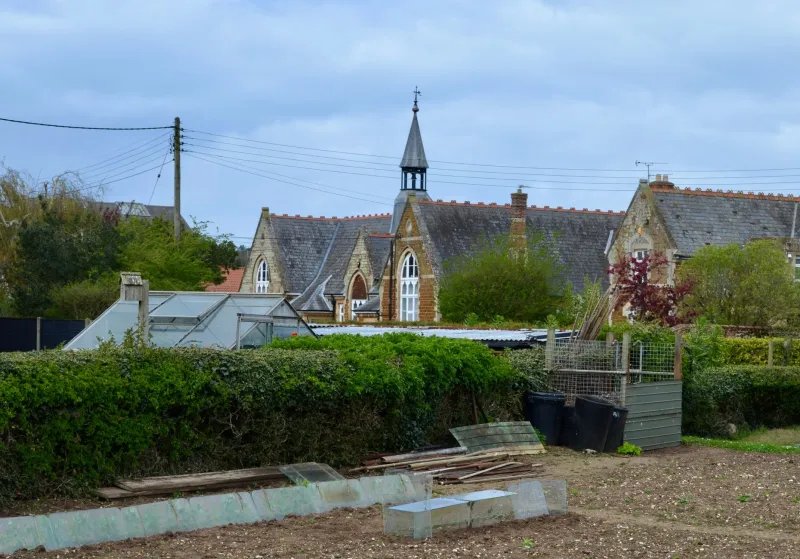
In the settled valleys and wind-scoured prairies of rural America, the parsonage occupied a particular kind of authority. It stood near the church, modest in construction but weighty in symbolism — a place where the community's spiritual life found its domestic anchor. Yet for those willing to look beyond the theological significance of these properties, the parsonage garden tells a second, equally compelling story. Across the nineteenth century and well into the twentieth, the cultivated ground surrounding ministers' homes functioned as something far more consequential than a kitchen plot. It served, in practical terms, as an unofficial proving ground for agricultural experimentation at a time when formal scientific infrastructure in rural America remained scarce.
The Minister as Gentleman Farmer
The image of the learned clergyman with soil under his fingernails is not merely a romantic conceit. Many rural ministers in early America arrived at their postings with educational backgrounds that included natural philosophy, botany, and what might today be recognized as applied horticulture. Trained in seminaries that often emphasized the moral and intellectual dimensions of physical labor, these men brought to their parishes both a theological conviction about the stewardship of the earth and a practical curiosity about how that earth might be made more productive.
Because parsonage stipends were frequently modest, supplementing the household through gardening and small-scale farming was not optional — it was essential. This economic necessity, paradoxically, created conditions favorable to experimentation. Ministers who needed to feed their families from limited acreage had strong incentives to test new varieties, adopt emerging techniques, and observe outcomes with something approaching scientific discipline. The parsonage garden became, in this way, a laboratory born of necessity rather than institutional design.
Botanical Networks and the Pastoral Correspondence
What transformed individual parsonage experiments into broader agricultural influence was the communication infrastructure that ministers already maintained as a matter of professional life. The nineteenth-century American clergy were, by vocation, prolific correspondents. Denominational networks, missionary societies, and theological exchanges created webs of regular written communication stretching across counties, states, and regions. Ministers exchanged seeds, cuttings, and grafted stock through these same channels with a naturalness that required no special organization — it was simply an extension of existing practice.
A pastor in the Connecticut River Valley might send a packet of early-ripening bean seed to a colleague newly settled in western Ohio, accompanied by careful notes on germination timing and soil preference. A German Reformed minister in Pennsylvania might share grafting techniques for cold-hardy apple stock with a Lutheran counterpart in the Shenandoah. These informal exchanges, accumulated over decades, constituted a distributed agricultural knowledge network of remarkable reach and resilience — one that operated entirely outside the structures of agricultural societies, land-grant colleges, and government bureaus.
Denominational periodicals amplified this exchange further. Many nineteenth-century religious newspapers carried regular columns on domestic economy, gardening, and rural improvement, and ministers contributed observations from their own parsonage grounds with some regularity. A single published letter describing the successful cultivation of a new wheat variety or a technique for managing orchard pests could reach thousands of rural readers across multiple states.
The Parsonage as Demonstration Plot
Beyond correspondence, the parsonage garden exerted influence through the most direct mechanism available: visibility. In communities where the minister's home occupied a prominent position near the center of village life, the condition of the parsonage grounds was a matter of public observation. Congregants who arrived for Sunday services could not help but notice what was growing in the kitchen garden, what fruit trees had been planted along the fence line, or what cover crop had been turned under in the small field behind the barn.
This visibility was not incidental. Some ministers understood quite deliberately that their gardens could serve as demonstration plots for practices they wished to encourage among their congregations. Sermons on stewardship and industry found tangible illustration in the well-managed rows of the parsonage garden. When a minister introduced a new variety of winter squash or demonstrated the benefits of composted manure through the obvious vigor of his vegetable beds, the lesson arrived through observation rather than instruction — often the more persuasive form of teaching.
Congreganal visits to the parsonage, which were common social occasions in rural communities, provided additional opportunities for informal agricultural exchange. A farmer who admired the minister's stand of sorghum or asked about the unfamiliar climbing bean on the south-facing trellis might carry both seed and technique home with him. These quiet transactions, repeated across generations of rural ministry, seeded change across the agricultural landscape in ways that left almost no documentary trace.
Women, Gardens, and the Unrecorded Record
Any honest accounting of the parsonage garden's agricultural significance must acknowledge the labor and intelligence that ministers' wives contributed to these spaces. In many households, the kitchen garden fell primarily within the wife's domain, and the women who managed these plots brought their own networks, their own experimental inclinations, and their own correspondence to bear on the work.
Minsters' wives exchanged seed packets through church women's associations and missionary circles with the same regularity that their husbands exchanged theological pamphlets. They maintained detailed household records — often the most precise documentation of planting dates, yields, and variety performance that survives from rural nineteenth-century properties. Their contributions to the agricultural knowledge embedded in parsonage gardens were substantial, though the historical record has been slow to acknowledge them.
What Survives and What Has Been Lost
For heritage travelers and agricultural historians visiting historic rural properties today, the parsonage garden presents both an opportunity and a challenge. Physical traces of these experimental plots are rarely preserved with the same care extended to church buildings or farmsteads of obvious architectural significance. The kitchen gardens have been mowed under, the old fruit trees have fallen or been removed, and the seed stocks that once circulated through pastoral networks have in many cases been lost entirely.
Yet documentary evidence — in denominational archives, in collections of ministerial correspondence held by theological seminaries, and in the household account books that occasionally surface in local historical societies — offers meaningful opportunities for recovery. Agricultural historians who have begun to examine these sources are finding a richer story than conventional accounts of rural improvement have suggested. The parsonage, it turns out, was never merely a residence. It was an institution in the fullest sense: a place where knowledge was generated, tested, shared, and transmitted across the rural American landscape.
Visiting the Legacy
For those drawn to agritourism with a historical dimension, a growing number of preserved parsonage properties offer access to this overlooked chapter of American agricultural history. Some historic church sites have begun restoring period-appropriate kitchen gardens on parsonage grounds, drawing on documentary records to replant heirloom varieties that would have been familiar to nineteenth-century ministers and their congregations. These living restorations provide a rare opportunity to encounter agricultural heritage not as artifact but as living practice — rooted, as it always was, in the specific character of a particular piece of ground and the particular community that worked it.
The parsonage garden, modest in scale and quiet in its historical voice, rewards close attention. In its rows and borders, in the old apple tree that no one thought to remove, in the seed varieties that a careful archivist has traced back through generations of pastoral correspondence, the story of American agricultural innovation finds one of its least expected and most instructive chapters.