Wages, Words, and Working Lives: Recovering the Hidden Histories of America's Farm Laborers
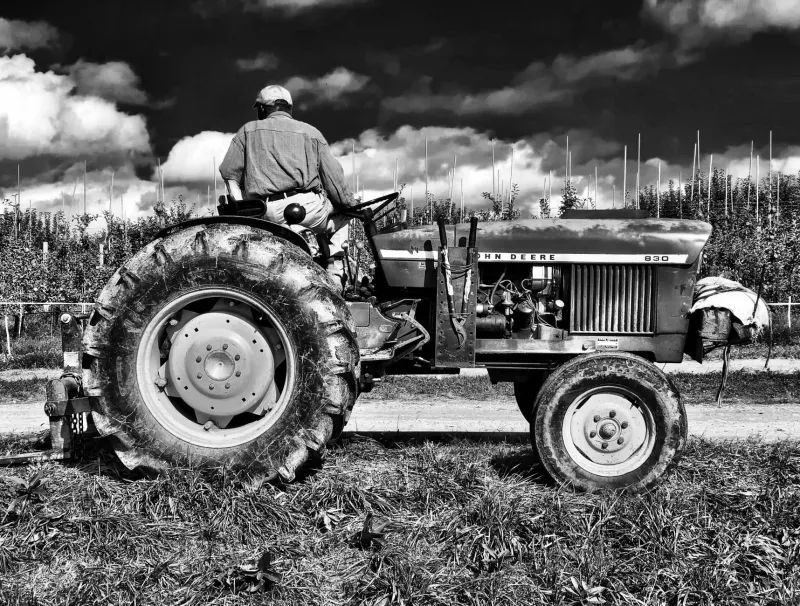
Walk through the parlor of a well-preserved nineteenth-century farmhouse, and the story told by its furnishings is almost always the same: the family that owned the land, the generations that inherited it, the patriarch whose portrait hangs above the mantelpiece. What those rooms rarely reveal is the world that existed just beyond the back door—the bunkhouses, the kitchen gardens tended before dawn, the hands that drove the plows and threshed the grain. For the workers who sustained America's historic farms, history has been slow to speak.
That silence is now being challenged. Across the country, archivists, historians, and heritage organizations are piecing together the lives of farm laborers through documents that were never intended to serve as personal histories: wage books, account ledgers, indenture agreements, letters written on scraps of paper, and interviews recorded decades ago with men and women who remembered the harvest seasons of their youth. What these sources reveal is not merely an economic footnote to agricultural history, but a rich and largely uncharted human landscape.
The Ledger as Biography
Farm account books are among the most common surviving documents from America's agricultural past, yet for years they were treated primarily as financial records rather than social ones. A careful reading of these ledgers tells a more complicated story. Entries noting weekly wages paid to a laborer named only as "James" or "the German boy" represent, in many cases, the sole surviving evidence that a particular individual lived and worked on a given property.
Researchers at several land-grant universities and regional historical societies have begun cross-referencing wage records with census data, church registers, and local newspaper accounts to reconstruct fuller portraits of these workers. In some instances, a laborer who appears as a single line in a farm ledger can be traced across multiple properties, through seasonal migration patterns, and eventually into land ownership records of his or her own. The ledger, read with patience and context, becomes something approaching a biography.
Indentured servitude, which persisted in rural America well into the mid-nineteenth century, left its own documentary trail. Indenture contracts often specified not only the terms of labor but the obligations of the landowning household—clothing, food, medical care, and in some cases, literacy instruction. These agreements offer an unusually detailed window into the material conditions of farm life for those at the lowest rungs of the agricultural economy.
Letters from the Field
Where ledgers record transactions, letters record lives. Personal correspondence written by or on behalf of farm laborers—whether hired hands, tenant farmers, or seasonal migrants—has survived in surprising quantity, scattered across courthouse archives, family collections, and the holdings of local historical societies that may not yet have catalogued what they possess.
These letters rarely discuss the grand narratives of agricultural history. Instead, they speak of wages delayed or disputed, of illnesses that prevented a man from completing the harvest, of daughters sent to work in town when the farm could no longer support the family. A letter from a German immigrant laborer in Wisconsin, preserved in a county historical archive, describes in careful, halting English the precise weight of grain he was expected to move each day and his uncertainty about whether the arrangement was fair. Such documents transform abstract labor history into something immediate and human.
Oral history projects have added another dimension to this recovery work. Beginning in the mid-twentieth century, programs affiliated with universities and state humanities councils recorded interviews with elderly rural Americans who had worked as hired hands or sharecroppers in the early decades of the 1900s. Many of these recordings sat undigitized for years. Their systematic preservation and transcription is now yielding material that no written document could provide: the cadence of a workday described from memory, the names of supervisors remembered with either gratitude or bitterness, the precise way a particular farm smelled in August.
Enslaved and Coerced Labor: Confronting the Hardest Histories
No honest account of farm labor history in America can avoid the foundational role of enslaved workers, whose contributions to the agricultural economy were systematically erased from the documentary record—or recorded only in the most dehumanizing terms. Plantation inventories listed enslaved people alongside livestock and equipment. Their knowledge, their skill, and their endurance built the agricultural wealth of entire regions.
Recent scholarship has made significant strides in recovering these histories. Freedmen's Bureau records, compiled after the Civil War, contain testimony from formerly enslaved individuals that offers direct accounts of agricultural labor conditions. DNA genealogy projects have helped descendants of enslaved farm workers identify the properties where their ancestors labored. In several documented cases, oral traditions preserved within African American families have proved more accurate than written records in identifying the specific farms, fields, and labor systems that shaped their ancestors' lives.
Heritage sites that engage honestly with this history—presenting the full picture of who worked the land, under what conditions, and for whose benefit—are finding that visitors respond with genuine and sustained interest. The discomfort of confronting coerced labor is increasingly understood not as a reason to avoid the subject, but as evidence of its historical weight.
Migrant Workers and the Seasonal Economy
The pattern of seasonal agricultural migration, so often associated with the twentieth century, has roots that extend deep into the nineteenth. Workers moved between farms following the rhythms of planting and harvest, their presence in any given community brief but economically essential. Because they were transient, they left fewer records than permanent residents—but they did leave records.
Railroad employment registers, boardinghouse logs, and the accounts of labor contractors who organized seasonal crews all offer glimpses into this mobile workforce. So do the records of churches and mission societies that established temporary ministries in agricultural communities during peak harvest seasons. In the early twentieth century, photographs commissioned by federal agricultural agencies documented migrant labor camps in striking detail, preserving faces and circumstances that might otherwise have been entirely lost.
Reading the Record Whole
The recovery of farm labor history is, at its core, a project of completeness. The historic farm is not fully understood until the experiences of everyone who worked it—owner and laborer, permanent resident and seasonal hand, free and coerced—are brought into the account. Wage records, letters, oral histories, and legal documents are not peripheral sources; they are the foundation of a more honest and more textured agricultural history.
For visitors to heritage farm sites, this expanded history offers something that a tour of the farmhouse alone cannot: a genuine reckoning with the human cost and human ingenuity that made American agriculture possible. The names in the ledgers deserve to be spoken aloud. The letters deserve to be read. The working lives they document deserve a place in the story that the land itself has always been trying to tell.