What the Timbers Remember: Reading the Hidden History Written Into America's Historic Barns
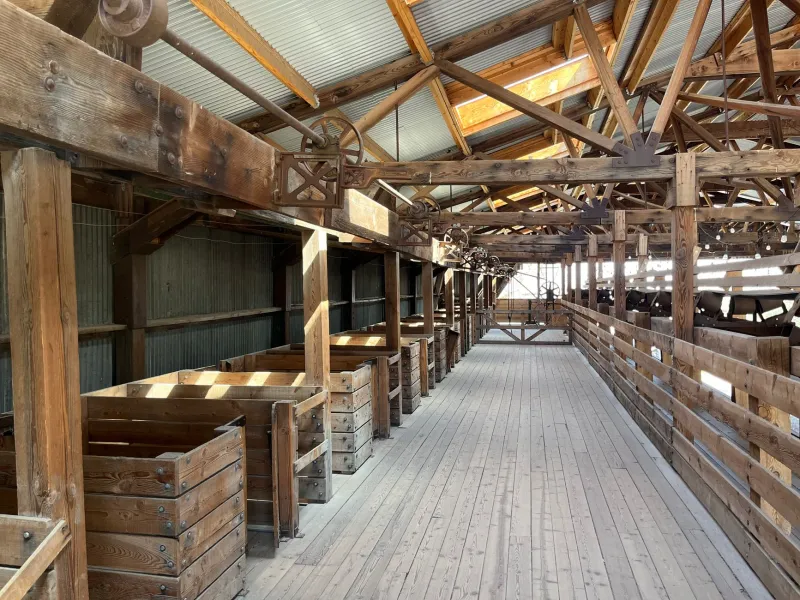
There is a particular kind of silence inside an old barn. It is not the absence of sound so much as the presence of accumulated time—the weight of generations pressing down through hand-hewn rafters and mortise-and-tenon joints that have held their grip for a century or more. For the casual observer, a weathered barn may appear to be little more than a structure in decline. For the conservator, the agricultural historian, or the farmer who has spent a lifetime working within its walls, that same building is something else entirely: a document.
Across rural America, a quiet and painstaking effort is underway to decode what these structures have preserved. As restoration projects multiply—driven by preservation grants, heritage tourism interest, and a renewed cultural appetite for agricultural history—barn interiors are yielding artifacts and inscriptions that no archive could have anticipated. The results are reshaping how scholars and enthusiasts alike understand the daily realities of rural life in the eighteenth, nineteenth, and early twentieth centuries.
The Carpenter's Signature
Among the most intimate discoveries made during barn restoration are the marks left by the craftsmen who built them. In the pre-industrial era, timber framing was a skilled trade practiced by itinerant carpenters and local tradesmen who often left behind evidence of their methods—and occasionally their identities.
Chisel marks, numbering systems, and layout lines are frequently found on the interior faces of hewn beams, protected from the elements by the very structure they support. These assembly marks, used to ensure that prefabricated frame components were raised in the correct sequence, often survive in remarkable condition. Conservators working on Pennsylvania German bank barns have documented Roman numerals and geometric symbols cut directly into the wood, some dating to the late 1700s.
More personal still are the carved inscriptions discovered on posts and sill plates: initials, full names, dates, and occasionally brief phrases. A conservator working on a dairy barn in upstate New York recently uncovered a carved date of 1847 accompanied by two sets of initials on a central post—almost certainly a record of the barn's construction year and the names of the men who raised it. Such markings occupy a curious position in the historical record: too informal for official documentation, too deliberate to be accidental. They are, in the most literal sense, the rural equivalent of signing one's work.
Recycled Wood and the Stories It Carries
Not all of the history embedded in historic barns was placed there intentionally. Some of the most revealing evidence comes from the materials themselves—specifically, from the practice of repurposing timber from earlier structures.
Economic necessity has always governed rural building. When a farmstead outgrew an older structure, or when fire or storm destroyed a building, usable lumber was rarely discarded. It was salvaged, recut, and incorporated into whatever came next. The result is that many surviving barns contain within their frames fragments of structures that no longer exist: earlier barns, farmhouses, mills, and outbuildings whose original identities can sometimes be reconstructed through careful analysis.
Dendrochronology—the science of dating wood through the analysis of tree-ring patterns—has emerged as a powerful tool in this work. Researchers at several university extension programs have used the technique to identify timbers in standing barns that predate the barns themselves by decades, occasionally revealing that a structure's oldest components originated in the colonial period. In one documented case in Virginia, a mid-nineteenth-century barn was found to contain framing lumber felled in the 1740s, suggesting a direct material connection to the earliest agricultural development of that property.
The presence of recycled material also tells economic stories. A sudden shift in lumber quality within a single structure—from carefully dressed hardwood to rougher, mixed-species framing—may mark the moment a family encountered financial difficulty. The physical evidence of hardship, preserved in wood and nail, carries a kind of dignity that no ledger entry can fully convey.
Paint, Pigment, and Decoration
The exterior of a historic barn has long been recognized as a cultural artifact in its own right. The tradition of painting barns red, for example, is frequently traced to the use of ferrous oxide—a readily available, rust-based pigment mixed with linseed oil that both colored and preserved wood siding. But the interior surfaces of these structures have received comparatively less attention, and they hold their own record of aesthetic expression.
In several Pennsylvania and Ohio barns associated with German immigrant communities, restorers have uncovered painted decorations on interior walls and structural members—geometric patterns, stylized floral motifs, and hex-like symbols that bear a clear relationship to the fraktur tradition brought from the Rhine Valley. These interior decorations were not purely ornamental. In many cases, they appear to have served apotropaic functions, placed at thresholds and above doorways in accordance with folk beliefs about the protection of livestock and stored grain.
Farmers of Scandinavian descent in the upper Midwest occasionally painted the interiors of their granaries and corn cribs with pigments ground from local minerals, leaving behind color fields that have survived beneath later layers of whitewash. The painstaking work of uncovering these layers—conducted by conservators trained in architectural paint analysis—has begun to restore a visual dimension to rural heritage that was long assumed to be lost.
Objects Left Behind
Restoration work inside historic barns frequently surfaces objects that were not so much hidden as simply forgotten: tools wedged into beam pockets, almanacs tucked into wall cavities, worn leather harness components suspended from wooden pegs. Each represents a moment of suspension—a farmer setting something down with the intention of returning, and never quite getting back to it.
One restoration team working on an 1880s hay barn in central Illinois discovered a small leather-bound account book wedged behind a vertical board in a feed room. The book documented crop yields, livestock sales, and equipment purchases across nearly two decades of farm operation. It has since been donated to a county historical society, where it serves as a primary source for researchers studying agricultural economics in the post-Reconstruction Midwest.
Such discoveries are not anomalies. They are, rather, the predictable consequence of working carefully within structures that have been largely undisturbed for generations. The barn, unlike the farmhouse, was rarely subject to the same cycles of renovation and modernization that stripped domestic interiors of their historical character. Its relative neglect has, paradoxically, made it a more faithful keeper of the past.
Listening to What Remains
For those engaged in the preservation of historic farm properties, the barn presents a particular kind of responsibility. It is not merely a structure to be stabilized and maintained, but a primary source to be read and interpreted before restoration obscures the very evidence it contains.
Increasingly, best-practice guidelines issued by state historic preservation offices recommend that barn restoration projects include a pre-intervention documentation phase—systematic photography, measured drawings, and written description of existing conditions before any work begins. Some programs go further, encouraging property owners to engage architectural historians or dendrochronologists before structural repairs are undertaken.
At its core, this careful approach reflects a recognition that the history embedded in these buildings is irreplaceable. The initials carved into a post by a carpenter in 1831, the beam felled in a forest that no longer exists, the painted hex above a stable door—none of these things can be reconstructed once they are gone. They are, in the fullest sense, the primary record of rural American life: unmediated, unedited, and quietly waiting for someone to look closely enough to read them.