Beneath the Pasture Grass: What DNA and Ground-Penetrating Radar Are Finding in America's Forgotten Farm Burial Grounds
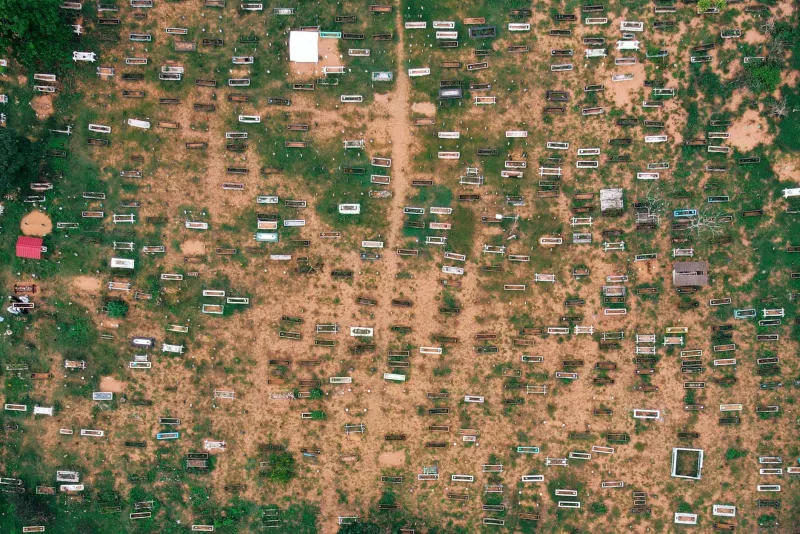
The pasture had been grazed by cattle for longer than anyone on the property could remember. Nothing in the deed suggested it had ever held anything other than grass and fencing posts. Then a descendant from three states away submitted a DNA sample to a genealogy database, a match surfaced, and a conversation began that would eventually bring a forensic archaeologist to the edge of that field with a ground-penetrating radar unit in tow.
Scenes like this are unfolding with increasing frequency across rural America. The convergence of consumer genomics, forensic archaeology, and digitized historical records has begun to illuminate a dimension of farm history that was never fully visible in courthouse archives or family bibles: the burial grounds that lie beneath working agricultural land, unregistered, unmarked, and in many cases entirely forgotten by the current generation of landowners.
The Scale of What Remains Hidden
Historians of rural America have long understood that formal cemeteries represent only a fraction of the burial landscape. Farm families throughout the eighteenth and nineteenth centuries frequently interred their dead on their own land, often in small plots near the woodline or at the edge of cultivated fields. These informal graves were practical choices in an era when distances to established churchyards were considerable and the rhythms of agricultural life left little room for extended travel.
More troubling still is the category of burial grounds associated with enslaved laborers on antebellum Southern farms and plantations. These sites were systematically excluded from official documentation. When land changed hands after the Civil War, the locations of these graves were rarely transferred with the deed. Decades of plowing, development, and landscape change have obscured many of them entirely.
Researchers at several historically Black colleges and universities have estimated that tens of thousands of such sites may exist across the former Confederate states alone, with comparable informal burial grounds scattered throughout Northern and Midwestern farm country as well, marking the graves of indentured servants, tenant farmers, and laborers who died far from their families of origin.
How Technology Is Changing the Search
Ground-penetrating radar, or GPR, has become the primary non-invasive tool for locating subsurface burial evidence. The technology, which sends electromagnetic pulses into the soil and measures the returning signals, can detect soil disturbances, changes in density, and the presence of decomposed organic material consistent with interment — all without disturbing the ground itself. When combined with magnetometry, which measures variations in the earth's magnetic field caused by buried materials, the approach can yield remarkably detailed pictures of what lies beneath a field.
DNA testing has opened a parallel avenue of discovery. As genealogy databases have grown to encompass tens of millions of profiles, researchers and descendants are increasingly able to identify connections to specific farm properties through inheritance records, estate documents, and freedmen's bureau files. A DNA match between two individuals with no apparent connection can, when cross-referenced with digitized land records, point toward a shared ancestor who lived and died on a specific parcel of ground.
The nonprofit organization Mapping the Fallen, based in Virginia, has worked with more than sixty farm properties in the mid-Atlantic region over the past decade, using a combination of oral history interviews, LiDAR aerial analysis, and GPR surveys to identify probable burial sites. Their work has confirmed the presence of previously unknown grave plots on properties in active agricultural production in Virginia, Maryland, and North Carolina.
The Ethical Terrain
Discovery, however, is only the beginning of a far more complex process. Once a probable burial site has been identified, landowners face a series of decisions that carry legal, ethical, and deeply personal weight.
In most states, the discovery of human remains on private land triggers notification requirements to state archaeological offices and, in some cases, law enforcement. The Native American Graves Protection and Repatriation Act governs the treatment of Indigenous remains on federal and tribal lands, but its protections do not extend to privately held farmland. For the graves of enslaved individuals and other non-Indigenous people, legal protections vary considerably by state, and in many jurisdictions, the landowner retains significant discretion over how a confirmed burial site is managed.
Descendant communities often approach these discoveries with a mixture of relief and grief. For families who have carried oral traditions about an ancestor buried on land they no longer own, confirmation of a grave's location can be both a form of vindication and a reopening of old wounds. Negotiations between current landowners and descendant families about access, memorialization, and future stewardship can be lengthy and emotionally charged, even when both parties approach them in good faith.
Dr. Annette Holloway, a forensic anthropologist who has consulted on burial site cases across the Southeast, describes the dynamic with care. "What we find beneath these fields is not simply archaeological data," she has said in public lectures. "It is someone's great-great-grandmother. The science opens the door, but what happens after that is fundamentally a human question."
How Landowners Are Responding
The responses of farm owners who have encountered burial sites on their properties span a wide range. Some have chosen to formalize the sites with small memorial markers, working with descendant families and local historical societies to create modest but dignified spaces of recognition. Others have placed deed restrictions on the parcels in question, ensuring that future owners cannot develop or disturb the identified areas.
A growing number of heritage farm owners are incorporating burial site preservation into their broader stewardship plans. In cases where the property is enrolled in a historic preservation easement, the existence of a confirmed burial ground can strengthen the justification for that easement and, in some instances, provide access to additional grant funding for archaeological documentation.
The question of ongoing agricultural use around confirmed grave sites is handled differently from property to property. Some landowners have converted the immediate area to native plantings or pollinator meadows, creating a visible distinction from the surrounding cultivated land. Others have maintained conventional pasture or crop production up to the identified perimeter, treating the burial site as a discrete protected zone within a working landscape.
What the Land Holds
There is a dimension of this subject that resists purely procedural treatment. The discovery that a working farm contains the remains of people who lived and labored there — whether by choice or by compulsion — transforms the relationship between the present occupant and the ground itself. The land ceases to be merely a productive asset and becomes something more layered: a place where the past is not metaphorically present but literally so.
For heritage tourism properties, confirmed burial sites present a particular opportunity and responsibility. Several farms that have documented and memorialized previously unknown grave plots have found that visitors respond to these spaces with unusual attentiveness. The existence of a marked burial ground within a working agricultural landscape communicates something that no interpretive panel can fully replicate — that the history of this land is not abstract, that real people are part of it, and that stewardship of a historic farm encompasses obligations that extend well beyond the growing season.
The pastures are not empty. The work of understanding what they hold — and honoring it appropriately — has only just begun.