Hands That Fed a Nation: Recovering the Hidden Labor Histories of America's Seasonal Farm Workers
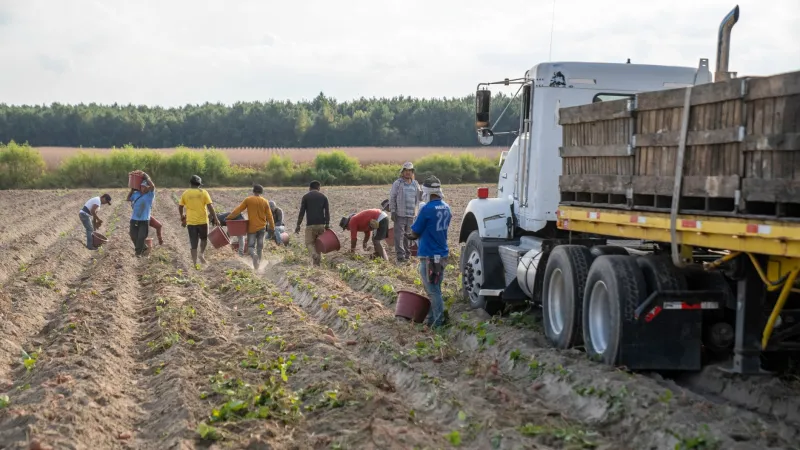
The farmhouse stands at the center of most heritage tourism narratives. Its timbers, its hearth, its family portraits — these are the artifacts that anchor the story told to visitors. Yet a short walk from that farmhouse, where bunkhouses once stood and harvest camps once spread across stubble fields, the historical record grows conspicuously thin. The men, women, and children who performed the back-breaking seasonal labor that made those farms productive rarely left their names in the deeds, the census columns, or the commemorative plaques that mark historic properties today.
That silence, historians and heritage professionals have come to understand, is not an accident. It is a condition of record-keeping itself — one that researchers are now working urgently to correct.
What the Records Omitted
America's agricultural economy has depended on mobile, seasonal labor since the colonial era. From the wheat harvests of the Great Plains to the fruit orchards of the Pacific Northwest, from the tobacco fields of the upper South to the sugar beet operations of the Mountain West, the rhythms of crop production demanded labor that no single farm family could supply alone. Hired hands arrived in spring and departed after the fall harvest. Migrant families followed the ripening of successive crops across hundreds of miles. Entire communities of workers — many of them recent immigrants, African Americans displaced by sharecropping's collapse, or Indigenous laborers whose land had been taken within living memory — moved through the agricultural landscape largely unacknowledged.
Official farm records, where they survive at all, typically list crop yields, equipment purchases, and land transactions. A laborer might appear as a single line item in a ledger: a name, a wage, a date. More often, workers appear simply as an aggregate expense — "harvest help" or "seasonal wages" — without any identifying detail whatsoever. The farm's story, as documented, belonged to the family that owned it.
Finding the Evidence Between the Lines
Despite these structural absences, a growing body of researchers has demonstrated that the evidence of seasonal and migrant labor history does exist — it simply requires a different kind of looking.
Employment records held by agricultural labor contractors, some of which survive in state archives and university special collections, occasionally preserve worker names, places of origin, and wage rates across multiple seasons. These documents, cross-referenced with census data and immigration records, have allowed historians to reconstruct the migration patterns of specific individuals and families with surprising precision. A Filipino worker documented in a Yakima Valley hop-yard ledger in 1924, for instance, can sometimes be traced through subsequent seasons across multiple states, revealing the scope and endurance of a working life spent in motion.
Personal correspondence offers a different and more intimate register. Letters written by workers to family members left behind — preserved by descendants, donated to historical societies, or recovered from estate sales — describe working conditions, wages, and the emotional weight of prolonged separation with a directness that no official record can match. Researchers at several land-grant universities have begun systematically digitizing such correspondence, creating searchable archives that connect individual testimony to broader patterns of agricultural labor history.
Photographs, too, have emerged as a critical evidentiary source. Farm families often commissioned or purchased photographs documenting their harvests, and these images — intended to celebrate the farm's productivity — incidentally preserved the faces of the workers who made that productivity possible. Researchers have developed methodologies for reading these photographs against the grain of their original intent, identifying workers, estimating camp sizes, and documenting the material conditions of seasonal labor life from the visual evidence embedded in images that were never meant to tell that story.
Oral History and the Living Record
Perhaps the most urgent dimension of this recovery work involves oral history collection. The grandchildren and great-grandchildren of seasonal and migrant farm workers are still alive in many communities, and the memories they carry — transmitted through family storytelling across generations — constitute an irreplaceable archive that no written record can replicate.
Heritage organizations in California's Central Valley, the Rio Grande Valley of Texas, and the agricultural counties of the Pacific Northwest have launched systematic oral history projects specifically focused on migrant and seasonal labor experience. These projects document not only working conditions and economic survival strategies but also the rich cultural dimensions of mobile agricultural communities: the music carried from region to region, the foodways adapted to camp cooking conditions, the informal social structures that sustained workers across seasons and across years.
What these testimonies consistently reveal is a world far more complex and culturally generative than the term "labor history" might suggest. Seasonal farm workers were not simply economic units moving between harvests. They were community builders, cultural carriers, and, in many cases, the connective tissue between regional agricultural economies that would have collapsed without their presence.
Heritage Sites Taking a Different Approach
A number of historic farm properties across the United States have begun to integrate these recovered labor histories into their interpretive programming, with results that have meaningfully expanded the scope of what heritage tourism can accomplish.
At several sites in the Midwest, bunkhouse reconstructions now anchor interpretive programs that center the experience of the hired hand rather than the farm owner. Visitors encounter reproduction ledgers, period photographs of harvest crews, and first-person audio narratives drawn from oral history recordings — a framing that places the labor relationship, rather than the ownership narrative, at the heart of the farm's story.
In the Southwest, heritage sites with documented histories of Mexican and Mexican-American seasonal labor have partnered with descendant communities to develop bilingual interpretive materials and community advisory panels, ensuring that the recovery of this history is guided by those with the deepest stake in its accuracy. These partnerships have also surfaced private family archives — photographs, letters, and material objects — that would otherwise remain invisible to institutional history.
Why This History Belongs at the Center
The recovery of seasonal and migrant farm worker history is not a corrective footnote to the story of American agriculture. It is, in many respects, the story itself. The harvests celebrated in farm family memoirs, the abundance documented in agricultural society reports, the prosperity that funded the farmhouses now preserved as heritage landmarks — all of it rested on a foundation of mobile, often exploited, consistently undervalued labor performed by workers whose names the official record rarely bothered to preserve.
Restoring those names, and the lives behind them, does not diminish the significance of farm family heritage. It enriches it by revealing the full human complexity of the agricultural landscape — the relationships of dependence and negotiation, the cultural exchanges that occurred in harvest fields and labor camps, the ways in which American rural life was shaped not by any single community but by the intersection of many.
The farmhouse and the bunkhouse, the family portrait and the harvest crew photograph — these are not competing artifacts. They are complementary evidence of a shared history that heritage tourism is only beginning to tell in its entirety.
For visitors drawn to historic farm properties by a genuine desire to understand the rural past, the invitation now is to look beyond the farmhouse door — to follow the path toward the field's edge, where the work was done and the workers were, for too long, forgotten.