The Trunk in the Attic: Decoding the Wardrobes Left Behind in America's Farmhouses
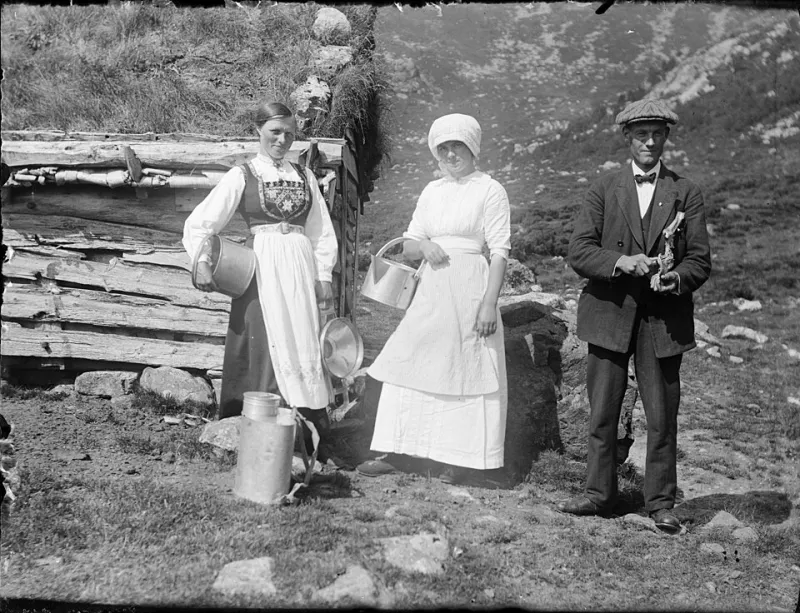
Photo: Fylkesarkivet i Sogn og Fjordane, No restrictions, via Wikimedia Commons
Every preserved farmhouse museum faces the same quiet dilemma: what to do with the clothes. Unlike a threshing machine or a cast-iron stove, garments are intimate. They carry sweat, mending, and ambition. Increasingly, costume historians argue that a farm family's wardrobe is among the richest surviving records of rural life — more honest, in some ways, than a diary.
Reading a Dress Like a Ledger
A work dress from an Iowa farmstead, circa 1880, tells its own economic story. The fabric is likely a sturdy cotton print, purchased by the bolt at the nearest dry goods store but cut and sewn at home. The seams are functional. The hem shows evidence of being let down as fabric became scarce. A second dress in the same trunk — darker, better fitted, with machine stitching at the armholes — was probably reserved for church and town visits.
Curators call this the two-wardrobe reality of farm life. Clothing did not merely cover the body; it scheduled it. Certain garments marked the Sabbath, others the harvest, others mourning. A widow's black apron worn over a printed dress signaled grief without halting the chores.
Climate Written in Cloth
Regional wardrobes differed in ways that map closely onto agricultural geography. Prairie farmwives favored layers that could be shed in the wind and heat of a Kansas July. In New England, wool dominated — it shed rain, resisted wind, and could be produced at home from the farm's own sheep. In the South, lighter cottons and the practical sunbonnet reflected long growing seasons and long hours in the field.
Footwear is especially telling. Bare feet in summer were common and unremarkable on subsistence farms; a pair of leather boots represented a significant cash outlay, often bought in a size the child would grow into.
Status, Store-Bought and Otherwise
By the 1890s, rural mail-order catalogs transformed the economics of dress. A farm family could order a ready-made suit, and the arrival of such a garment often provoked exactly the social calculation the catalogs intended. Store-bought clothes signaled prosperity — or its careful performance. Historians have documented cases of families wearing mail-order clothing to town while mending it carefully at home to conceal the labels of debt.
Where to Encounter the Wardrobe
- Old World Wisconsin — Interpreters in period-correct farm clothing demonstrate seasonal dress across ethnic farmsteads.
- Shelburne Museum, Vermont — Its textile collections include substantial holdings of rural New England clothing.
- Living History Farms, Iowa — The 1900 horse-powered farm offers a full picture of work dress in action, from aprons to boots.
- Genesee Country Village & Museum, New York — Costumed staff rotate garments seasonally, illustrating how weather shaped rural wardrobes.
Several sites now offer trunk-opening programs or behind-the-scenes textile tours. For the traveler willing to ask, the clothing in the closet may be the most eloquent artifact in the house.